What Is Glucoamylase? Industrial Starch-to-Glucose Enzyme Guide
A practical B2B guide to glucoamylase, also called amyloglucosidase, and its role in converting liquefied starch into glucose for syrups and fermentation.
High DE potentialLow residual dextrinFermentation-ready
Glucoamylase is an industrial starch-converting enzyme used to release glucose from dextrins, maltose, and partially hydrolyzed starch. It is a core processing tool in starch sweetener production, fermentation feedstock preparation, brewing, distilling, and other applications where high fermentable sugar release and predictable conversion are commercially important.
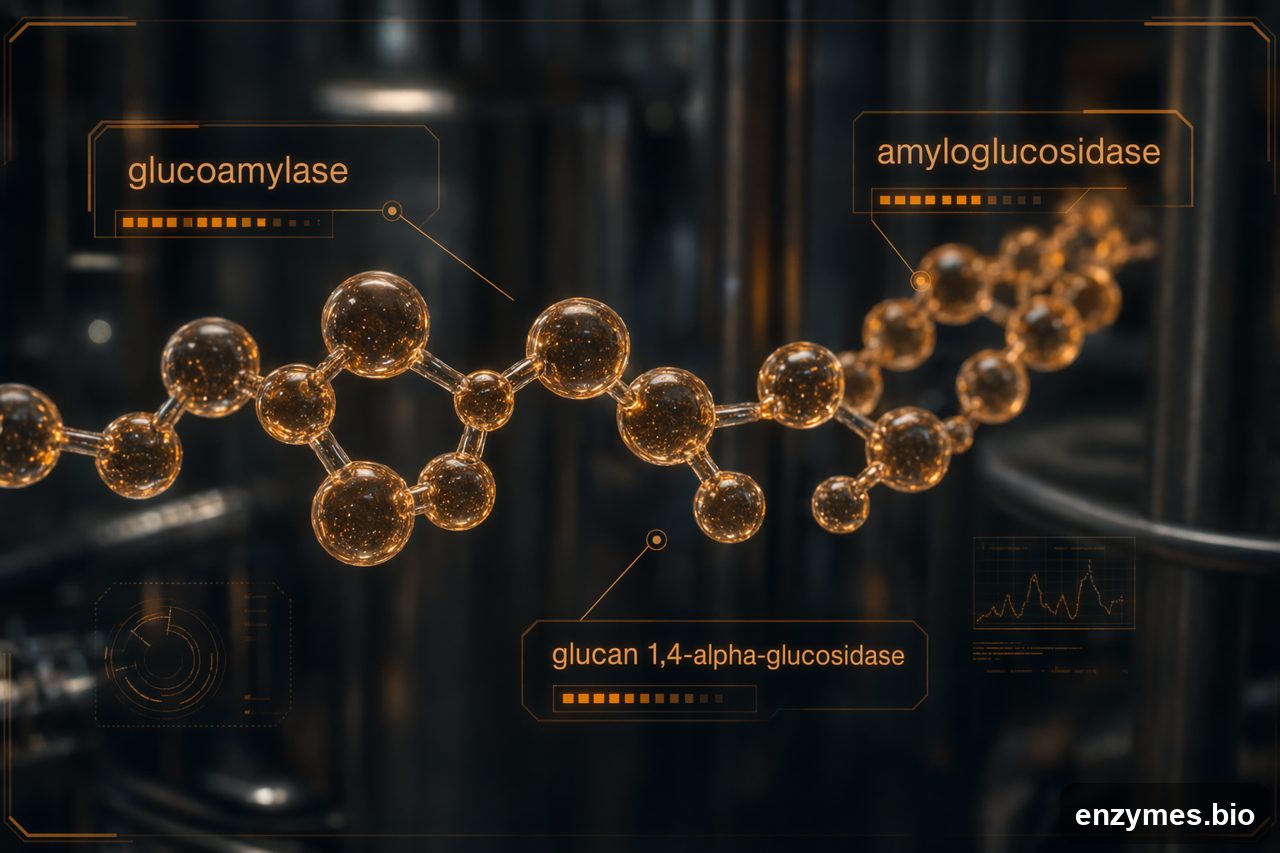
You may also see it listed as amyloglucosidase or glucan 1,4-alpha-glucosidase. In practical B2B usage, these names usually point to the same functional objective: converting starch-derived carbohydrates into glucose-rich streams.
For process teams, the value is straightforward: glucoamylase helps turn liquefied starch into a usable sugar profile with controlled viscosity, high dextrose potential, and better downstream consistency.
The Short Definition
Glucoamylase, also known as amyloglucosidase or glucan 1,4-alpha-glucosidase, is an exo-acting carbohydrase that releases glucose from the non-reducing ends of starch-derived chains.
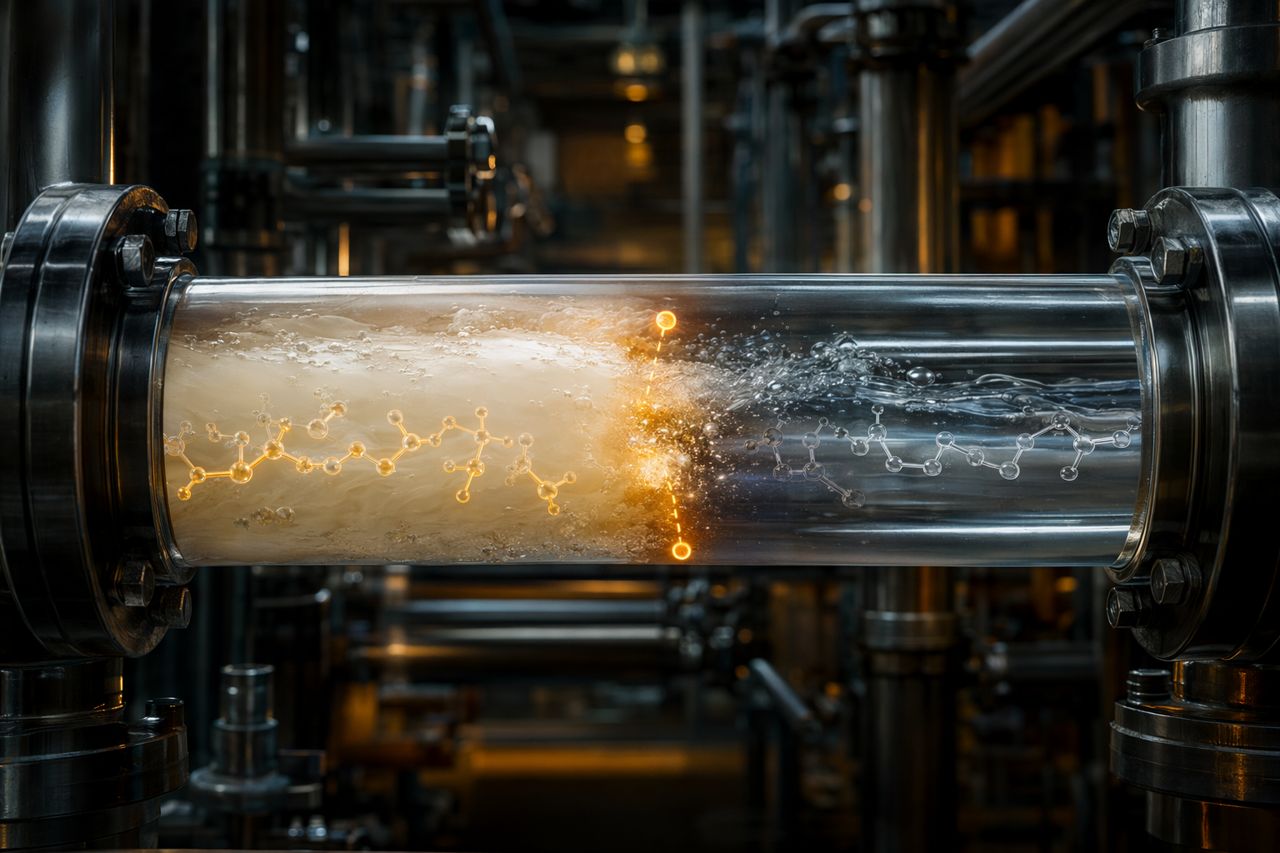
In less formal terms: after starch has been gelatinized and broken down into shorter dextrins, glucoamylase continues the conversion by trimming those chains into glucose.
Why the Name Amyloglucosidase Is Used
The term amyloglucosidase describes what the enzyme does:
Amylo- refers to starch-based carbohydrates.
Glucosidase refers to enzyme action that releases glucose from glycosidic bonds.
In technical documentation, procurement specifications, and formulation files, glucoamylase and amyloglucosidase are often used interchangeably. What matters for purchasing and process validation is not the label alone, but the enzyme source, performance profile, thermal behavior, pH fit, substrate compatibility, and supplier consistency.
How Glucoamylase Works in Starch Conversion
Industrial starch conversion usually happens in stages. Glucoamylase is most often used after starch has already been cooked and liquefied.
1. Starch is prepared and liquefied
Native starch granules are heated and hydrated so the structure opens. A liquefying enzyme, commonly alpha-amylase, reduces long starch polymers into shorter dextrins and lowers viscosity.
2. Glucoamylase saccharifies the dextrins
Glucoamylase acts from chain ends, progressively releasing glucose. It primarily attacks alpha-1,4 bonds and can also contribute to debranching activity at alpha-1,6 linkages, depending on enzyme type and process conditions.
3. The process moves toward a glucose-rich stream
As saccharification proceeds, the carbohydrate profile shifts toward glucose. For fermentation operations, that means more fermentable substrate. For syrup producers, it supports high-dextrose targets and downstream refining efficiency.
What Glucoamylase Is Used For
Glucoamylase is selected when a process needs reliable glucose release from starch-based raw materials.
Starch sweeteners
In glucose syrup and high-dextrose syrup production, glucoamylase helps drive saccharification after liquefaction. The objective is a consistent glucose-rich liquor suitable for filtration, refining, evaporation, or further conversion.
Fermentation feedstocks
Fermentation plants use glucoamylase to prepare glucose from corn, wheat, cassava, rice, potato, and other starch sources. More complete saccharification can support stronger feedstock utilization, stable fermentation kinetics, and improved batch-to-batch predictability.
Brewing and distilling
In grain-based alcohol processes, glucoamylase improves fermentable sugar availability. It can be used to help convert residual dextrins into glucose, supporting attenuation and alcohol yield objectives.
Food and ingredient processing
Glucoamylase can be used wherever controlled starch hydrolysis is required to shape sweetness, solids behavior, viscosity, or fermentable sugar content.
What Buyers Should Specify
A glucoamylase purchase should be based on process fit, not just enzyme name. Useful specification points include:
Raw material: corn, wheat, cassava, rice, potato, sorghum, or mixed starch streams.
Process stage: post-liquefaction saccharification, simultaneous saccharification-fermentation, brewing adjunct conversion, or syrup production.
Operating window: target pH, process temperature, hold time, and solids level.
Downstream requirements: filtration behavior, refining needs, microbial controls, and compatibility with yeast or other production organisms.
Regulatory and documentation needs: food grade, feed grade, fermentation use, allergen statements, non-GMO preferences, country-specific compliance, and shipping documentation.
What Glucoamylase Does Not Do Alone
Glucoamylase is powerful, but it is not a one-enzyme answer for every starch process.
It does not replace proper starch cooking, liquefaction, temperature control, or contamination management. In many processes, glucoamylase works alongside alpha-amylase, pullulanase, protease, cellulase, hemicellulase, or yeast nutrients depending on the raw material and production target.
For best results, it should be evaluated as part of the full conversion system: substrate preparation, enzyme sequence, residence time, solids loading, pH control, and downstream separation.
Key Commercial Benefits
When properly matched to the process, glucoamylase can support:
Higher glucose availability from starch-derived substrates.
Lower residual dextrin levels after saccharification.
Reduced viscosity during downstream handling.
More predictable fermentation performance.
Improved conversion consistency across raw material variation.
Cleaner decision-making for procurement and production planning.
The measurable value is not simply that the enzyme works. It is that it helps the plant convert starch into a predictable carbohydrate profile with fewer surprises downstream.
Common Questions
Is glucoamylase the same as amyloglucosidase?
In most industrial contexts, yes. Amyloglucosidase is another common name for glucoamylase. Both refer to enzymes used to release glucose from starch-derived carbohydrate chains.
Is glucoamylase the same as alpha-amylase?
No. Alpha-amylase is mainly used to break long starch molecules into shorter dextrins and reduce viscosity during liquefaction. Glucoamylase is mainly used after that step to release glucose from those dextrins during saccharification.
Does glucoamylase produce glucose or maltose?
Glucoamylase is selected primarily for glucose release. Maltose and other sugars may be present depending on the substrate and process design, but the commercial reason to use glucoamylase is to push conversion toward glucose.
Can glucoamylase be used in fermentation?
Yes. It is widely used to generate fermentable sugars from starch-based feedstocks. The right grade and process setup depend on substrate, organism, temperature profile, pH, and production target.
Request Pricing or Technical Fit Review
If you are evaluating glucoamylase for starch syrup, fermentation, brewing, distilling, or ingredient production, send your process basics and target outcome. Sacchera can review the application and respond with practical supply and fit guidance.
Prefer a quick commercial response? Use the same form to get pricing for your target application.