Glucoamylase in Liquefaction and Saccharification | Starch Processing Guide
A practical guide to where glucoamylase fits after starch liquefaction, how it supports saccharification, and what processors should evaluate for yield, viscosity, glucose release, and consistency.
High DE potentialLow residual dextrinFermentation-ready
Where Glucoamylase Fits in Starch Liquefaction and Saccharification
Starch conversion is not one reaction. It is a controlled sequence: hydrate and open the starch, reduce viscosity, create dextrins, then convert those dextrins into glucose-rich streams for fermentation or sweetener production.
Glucoamylase sits at the saccharification stage. Its commercial value depends on how well the upstream liquefaction step prepares the substrate, and how well the saccharification window is managed against conversion targets, throughput, energy use, and downstream quality.
For starch processors, ethanol plants, and sweetener producers, the practical question is not simply whether glucoamylase can release glucose. The question is whether it can do so predictably under your feedstock, solids level, residence time, pH strategy, contamination controls, and production economics.
The short version
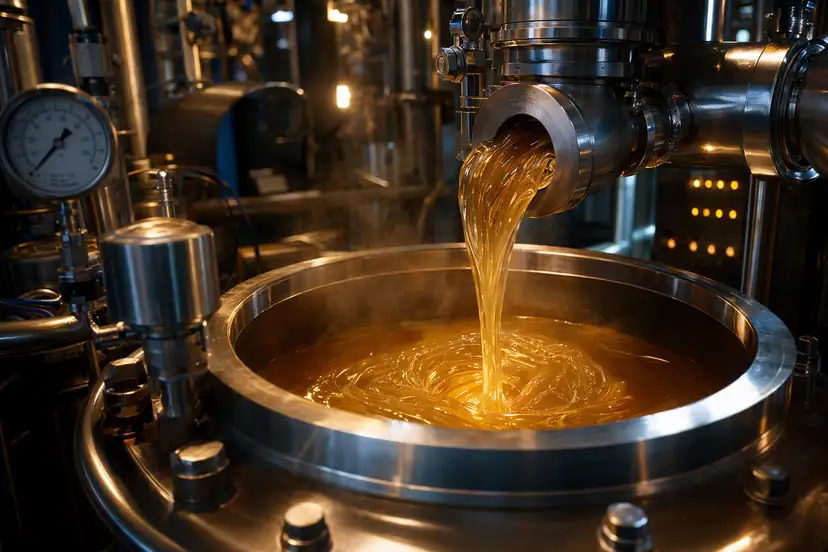
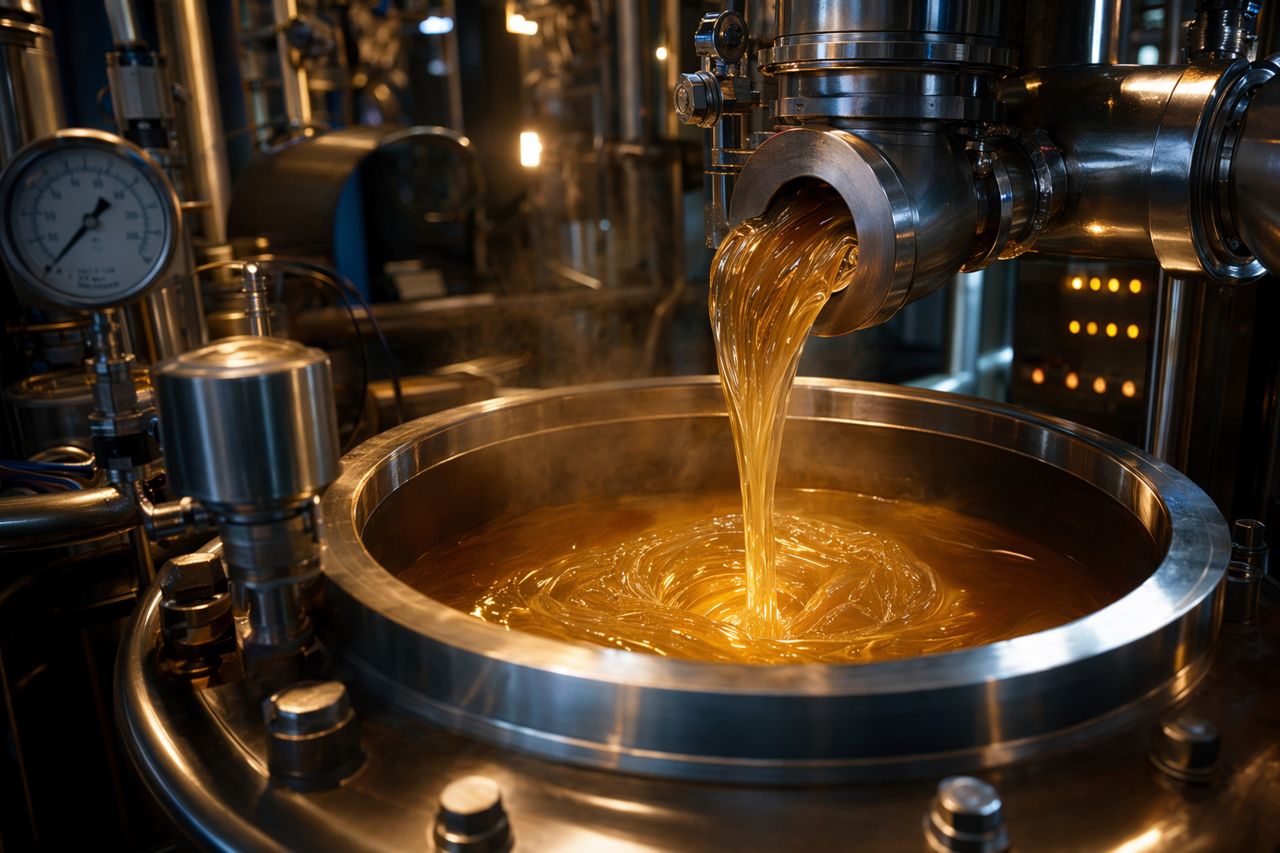
Liquefaction makes starch processable. Heat, mechanical mixing, and alpha-amylase reduce starch paste viscosity and produce shorter dextrin chains.
Saccharification makes dextrins valuable. Glucoamylase converts dextrins into glucose by working from chain ends.
Performance is system-dependent. Feedstock quality, liquefaction completeness, dry solids, pH, temperature profile, hold time, and microbial load all affect conversion.
Better conversion supports better economics. High glucose release can improve fermentable sugar availability, ethanol yield, dextrose syrup quality, and downstream refining efficiency.
Procurement should evaluate more than price. Consistency, supply reliability, technical support, formulation fit, and batch-to-batch performance matter at plant scale.
Liquefaction: opening the starch for conversion
Native starch granules are compact, semi-crystalline structures. In a processing line, they must be hydrated, gelatinized, and broken down before glucoamylase can work effectively.
During liquefaction, the process typically focuses on:
Gelatinization and hydration — making starch accessible by disrupting granule structure.
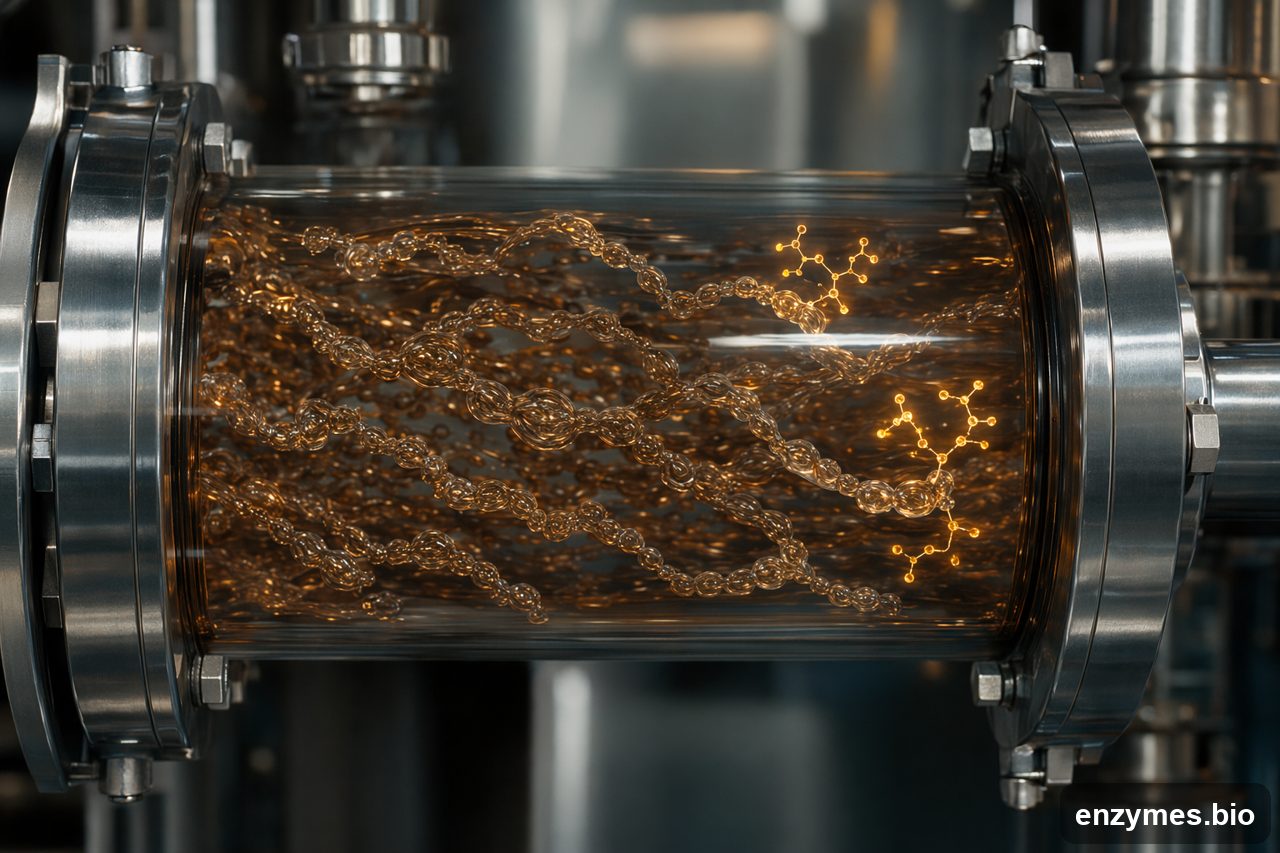
Dextrin formation — cutting long starch polymers into shorter chains that are suitable for saccharification.
A strong liquefaction step does not finish the job. It prepares the job. If liquefaction leaves too many inaccessible starch fragments, oversized dextrins, or poorly dispersed solids, glucoamylase may be forced to work against substrate limitations rather than enzyme limitations.
Saccharification: where glucoamylase delivers glucose release
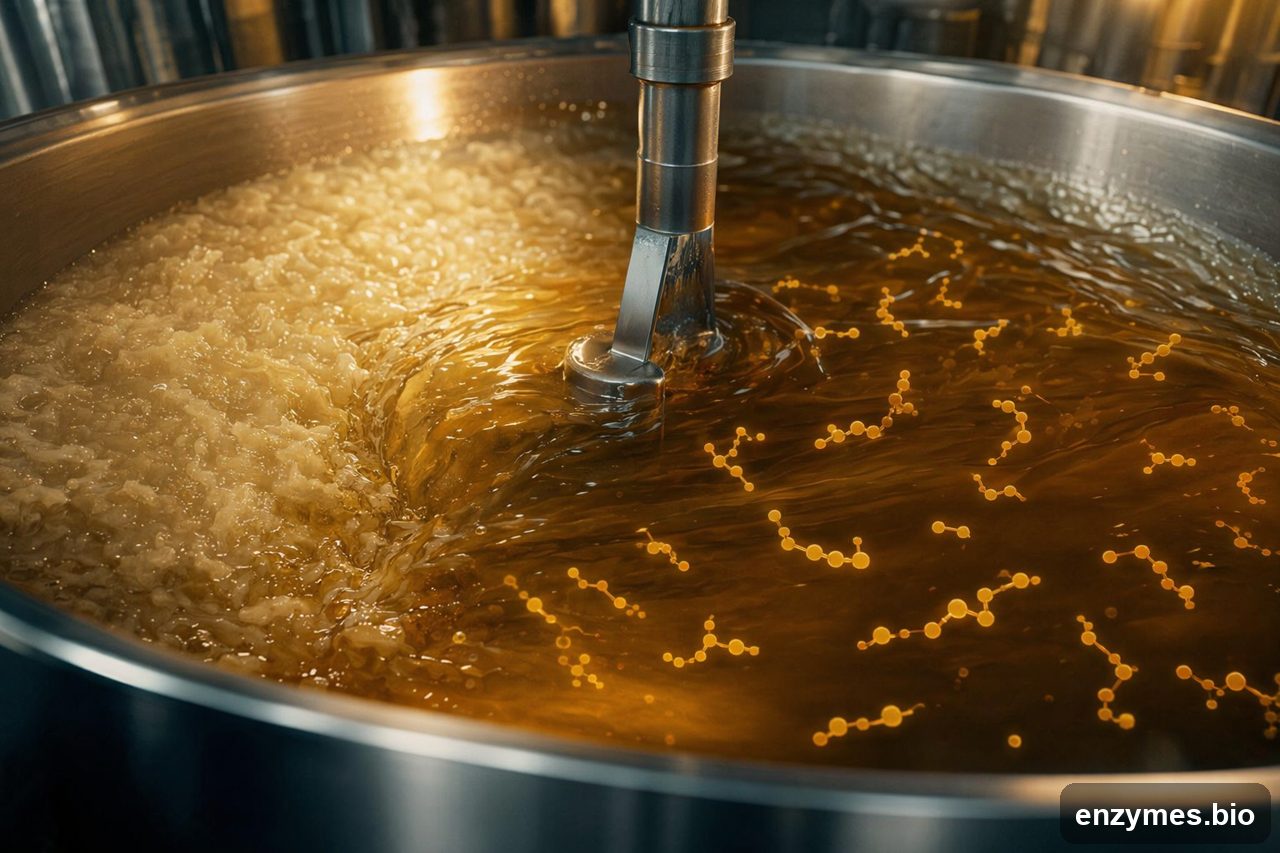
Glucoamylase, also known as amyloglucosidase or glucan 1,4-alpha-glucosidase, hydrolyzes glucose units from the non-reducing ends of dextrin chains. In commercial starch conversion, that action is used to push liquefied starch streams toward high glucose concentration.
This matters in two major routes:
Fermentation streams
For ethanol and other fermentation operations, glucoamylase helps convert liquefied starch into fermentable sugar. Better glucose availability can support more complete fermentation, stronger yield potential, and more stable plant operation when substrate and process conditions are controlled.
Sweetener streams
For dextrose and glucose syrup production, glucoamylase supports high dextrose formation before refining, concentration, polishing, or further conversion. The objective is not only conversion, but also a stream that behaves consistently in downstream processing.
Why glucoamylase is added after liquefaction
Glucoamylase is most effective when starch has already been opened and shortened into soluble dextrins. Adding it into a poorly liquefied mash can create avoidable inefficiency: slow conversion, incomplete glucose release, inconsistent residual dextrins, or process variability that shows up later in fermentation or syrup quality.
The right sequence allows each enzyme class to do its job:
Alpha-amylase in liquefaction: rapid internal chain cutting and viscosity reduction.
Glucoamylase in saccharification: progressive glucose release from dextrin chain ends.
That division is important for plant economics. Liquefaction protects handling and throughput. Saccharification drives conversion value.
What process teams should watch
1. Liquefaction completeness
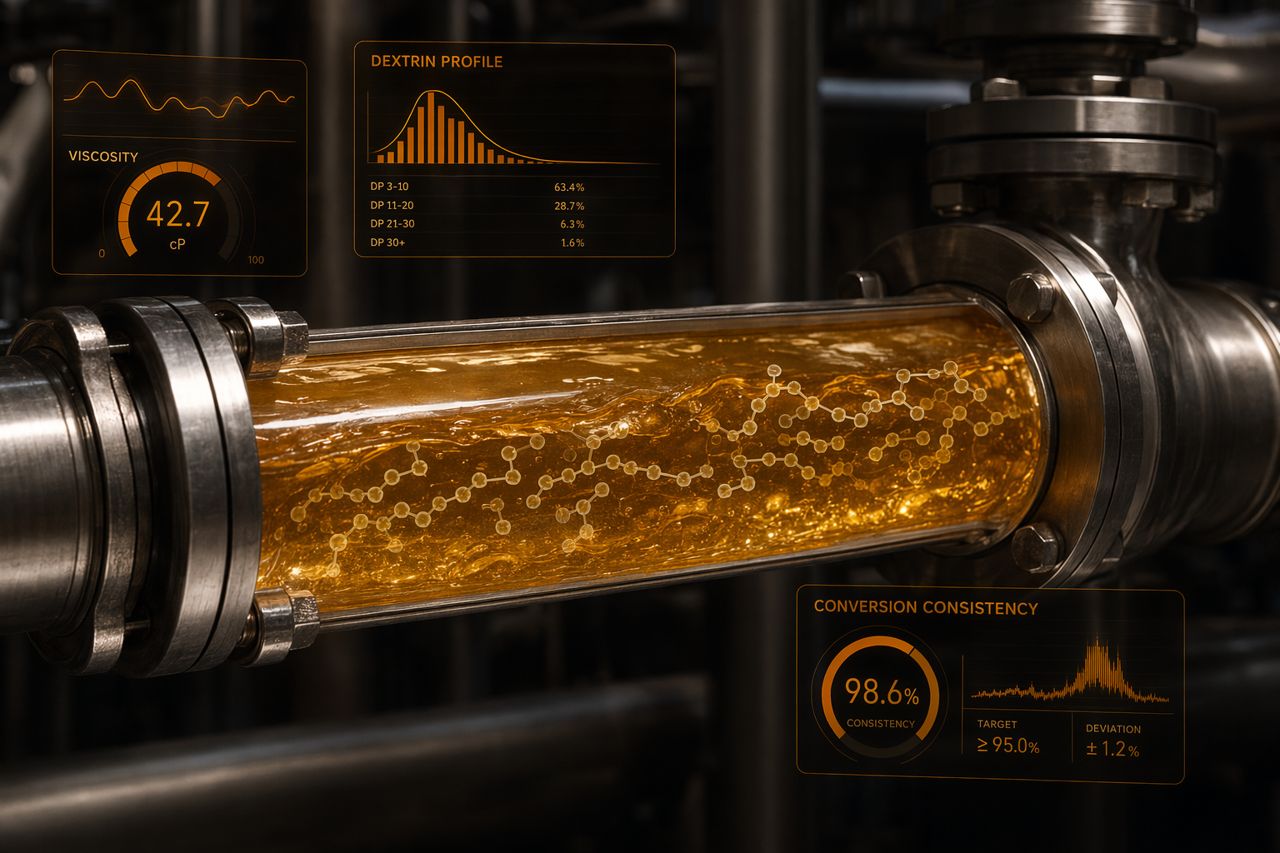
If the liquefied stream contains poorly opened starch, conversion may plateau early. Operators may see higher residual carbohydrates, slower saccharification, or variable fermentation performance. Before increasing enzyme input, review the upstream cook, mixing, hold profile, jet or tank performance, and dextrin distribution.
2. Substrate profile
Corn, wheat, tapioca, potato, rice, and mixed starch streams do not behave identically. Protein, fiber, lipids, mineral load, and starch structure can influence enzyme access and downstream clarification. A good glucoamylase recommendation starts with the substrate, not with a generic dose.
3. Solids level and viscosity
Higher solids can improve plant productivity, but they also increase mass-transfer demands. If viscosity remains high after liquefaction, glucoamylase may not contact substrate evenly. Process engineers should evaluate mixing quality, pumpability, hold-tank geometry, and heat distribution alongside enzyme selection.
4. pH and temperature strategy
Glucoamylase performance depends on the operating window selected by the plant. The best choice is the one that fits the plant's actual saccharification conditions, not only the theoretical optimum. Stability under the intended pH and temperature profile is central to predictable conversion.
5. Residence time and target conversion
A plant producing fermentation mash may optimize differently from a plant producing high-dextrose syrup. The commercial target defines the saccharification strategy: rapid glucose release, maximum conversion, controlled residual profile, or balanced throughput and enzyme cost.
6. Contamination control
Saccharification conditions can create exposure time for microbial activity if the line is not well controlled. Enzyme performance should be considered alongside sanitation, hold time, temperature profile, and upstream raw material quality.
Common operating symptoms and what they may indicate
Plant observation
Possible process interpretation
Slow glucose build after liquefaction
Dextrin profile may be too large, substrate may be poorly opened, or saccharification conditions may not match the enzyme
High residual dextrins
Conversion time, enzyme fit, substrate accessibility, or process window may need review
Fermentation yield variability
Fermentable sugar release may be inconsistent, or upstream liquefaction may be shifting between batches
Viscosity remains difficult after cook
Liquefaction may need attention before saccharification can perform predictably
Syrup quality varies downstream
Conversion profile, raw material variation, or saccharification control may be affecting refining behavior
These symptoms should be investigated as a system. Increasing enzyme input without diagnosing the process can raise cost without solving the constraint.
How glucoamylase supports industrial output
When selected and applied correctly, glucoamylase can help starch processors achieve:
Higher glucose release from liquefied starch streams
Improved fermentable sugar availability for ethanol and biochemical fermentation
Reduced residual dextrin load in target conversion processes
More consistent saccharification profiles between batches
Better alignment between conversion time and plant throughput
More predictable syrup behavior before downstream refining
A clearer cost model for enzyme input versus yield value
Selection criteria for technical and procurement teams
A commercially useful glucoamylase supply decision should include both process and purchasing requirements.
Technical evaluation
Substrate type and variability
Liquefaction profile and dextrin distribution
Saccharification pH and temperature strategy
Target glucose release or downstream performance target
Compatibility with existing process aids and control philosophy
Stability during expected hold time
Performance consistency across production runs
Commercial evaluation
Reliable availability for scheduled production
Clear specification and documentation package
Packaging formats suited to plant handling
Lot consistency and traceability
Technical support for process alignment
Total cost contribution, not only purchase price
The lowest-cost enzyme on a purchase line may not be the lowest-cost option in the plant. Conversion efficiency, lost yield, rework, delayed fermentation, off-spec syrup, and downtime all affect the real economics.
Where Sacchera fits
Sacchera is built for industrial buyers who need glucoamylase to perform in real production systems. We support starch processors, ethanol producers, and sweetener manufacturers evaluating enzyme fit for liquefied starch saccharification.
Our focus is practical: match glucoamylase selection to substrate, conversion target, process window, documentation needs, and supply expectations. If your plant is reviewing saccharification performance, qualifying an alternate supplier, scaling a new formulation, or tightening yield control, we can help frame the decision clearly.
Request pricing or a process-fit recommendation
Share your application, substrate, target output, and current process constraints. Sacchera will respond with a practical commercial recommendation for glucoamylase supply.
Prefer a fast commercial response? Use the form above to get pricing, availability, and a process-fit recommendation from Sacchera.