How Glucoamylase Converts Starch and Dextrins into Glucose
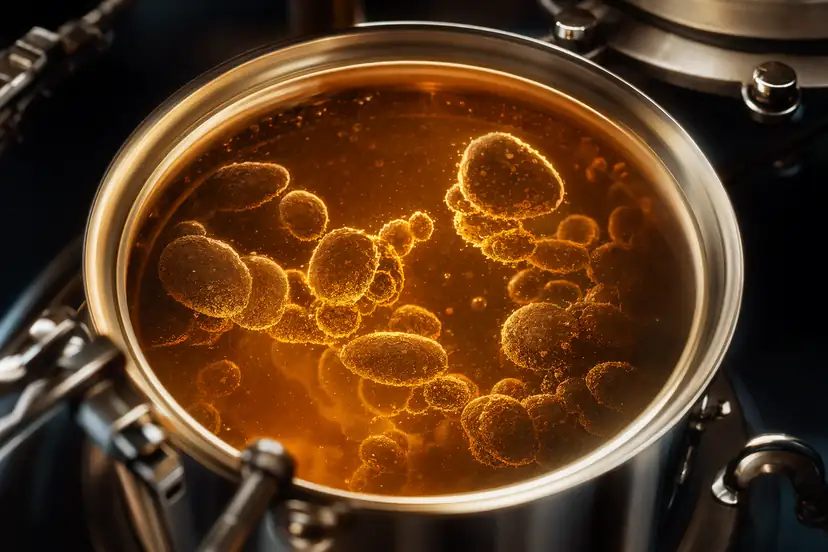
Glucoamylase is the finishing enzyme in many starch conversion systems. After starch has been cooked, gelatinized, and liquefied into shorter dextrins, glucoamylase drives the process toward glucose by cleaving glucose units from the non-reducing ends of starch-derived chains.
For commercial teams, that mechanism matters because it connects directly to yield, fermentable sugar release, syrup profile, viscosity control, and batch-to-batch consistency.
Glucoamylase, also known as amyloglucosidase or glucan 1,4-alpha-glucosidase, is used where starch needs to become glucose-rich syrup or readily fermentable substrate.
The role of glucoamylase in starch hydrolysis
Industrial starch conversion is usually staged. Glucoamylase is not typically the first enzyme used on raw starch slurry. It performs best after upstream preparation has opened the starch structure and reduced chain length.
A simplified process sequence looks like this:
Starch slurry preparation
The starch source is dispersed and conditioned for processing.
Gelatinization and liquefaction
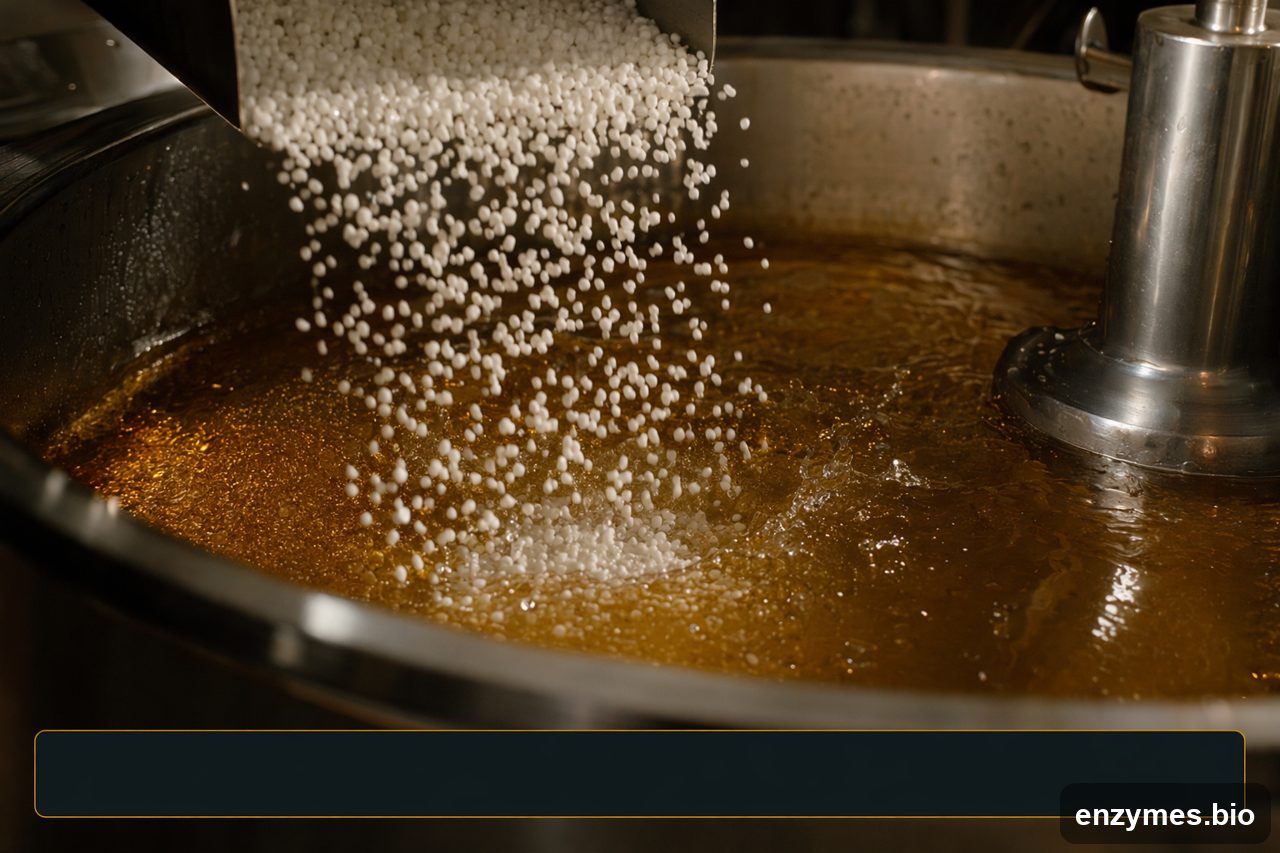
Heat and liquefying enzymes open starch granules and reduce viscosity by cutting long chains into shorter dextrins.
Saccharification with glucoamylase
Glucoamylase releases glucose from dextrins, moving the carbohydrate profile toward high glucose content.
Downstream use or refinement
The glucose-rich stream may be fermented, refined into syrup, concentrated, filtered, blended, or converted further depending on the application.
The key point: glucoamylase turns partially hydrolyzed starch into a more usable glucose stream.
What glucoamylase does at the molecular level
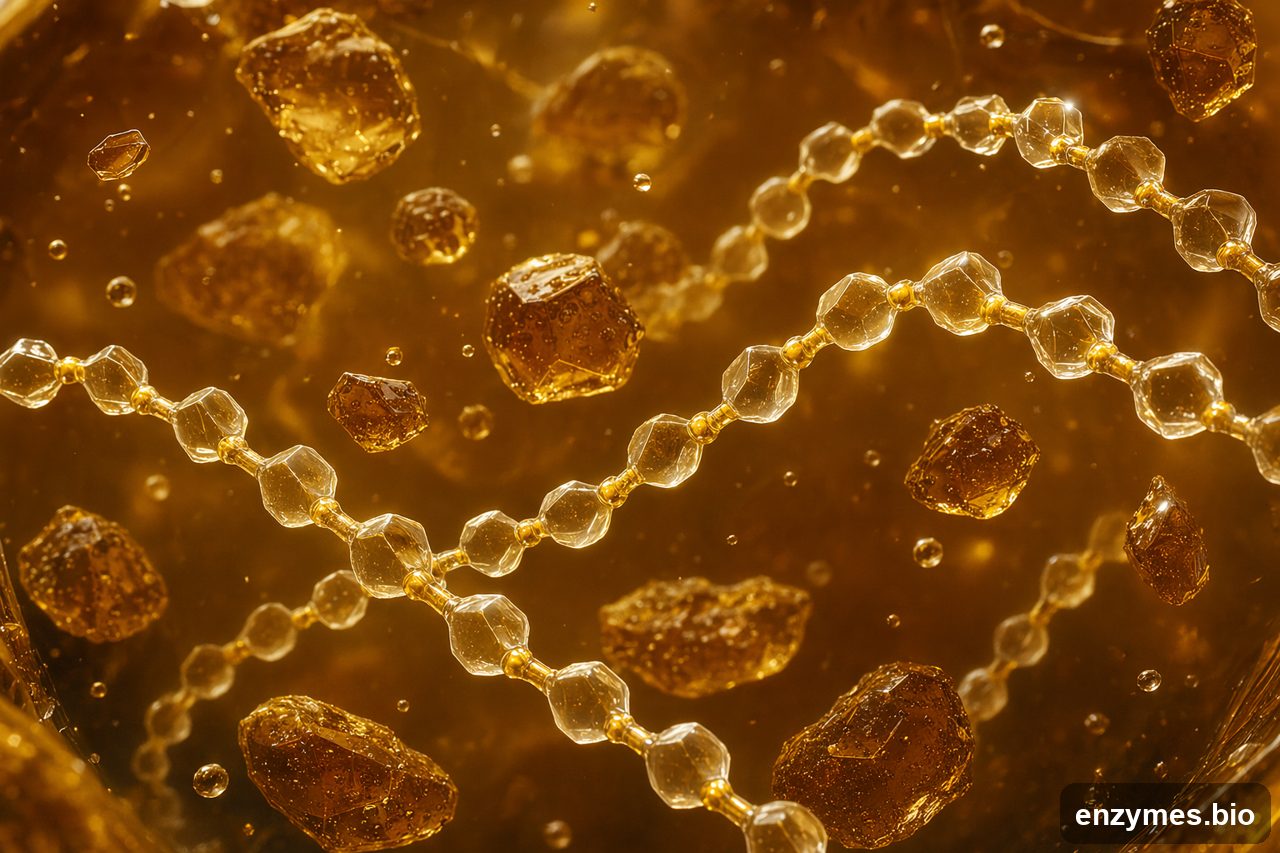
Starch is built mainly from two glucose polymers:
Amylose — mostly linear chains connected by alpha-1,4 linkages
Amylopectin — branched chains with alpha-1,4 linkages and alpha-1,6 branch points
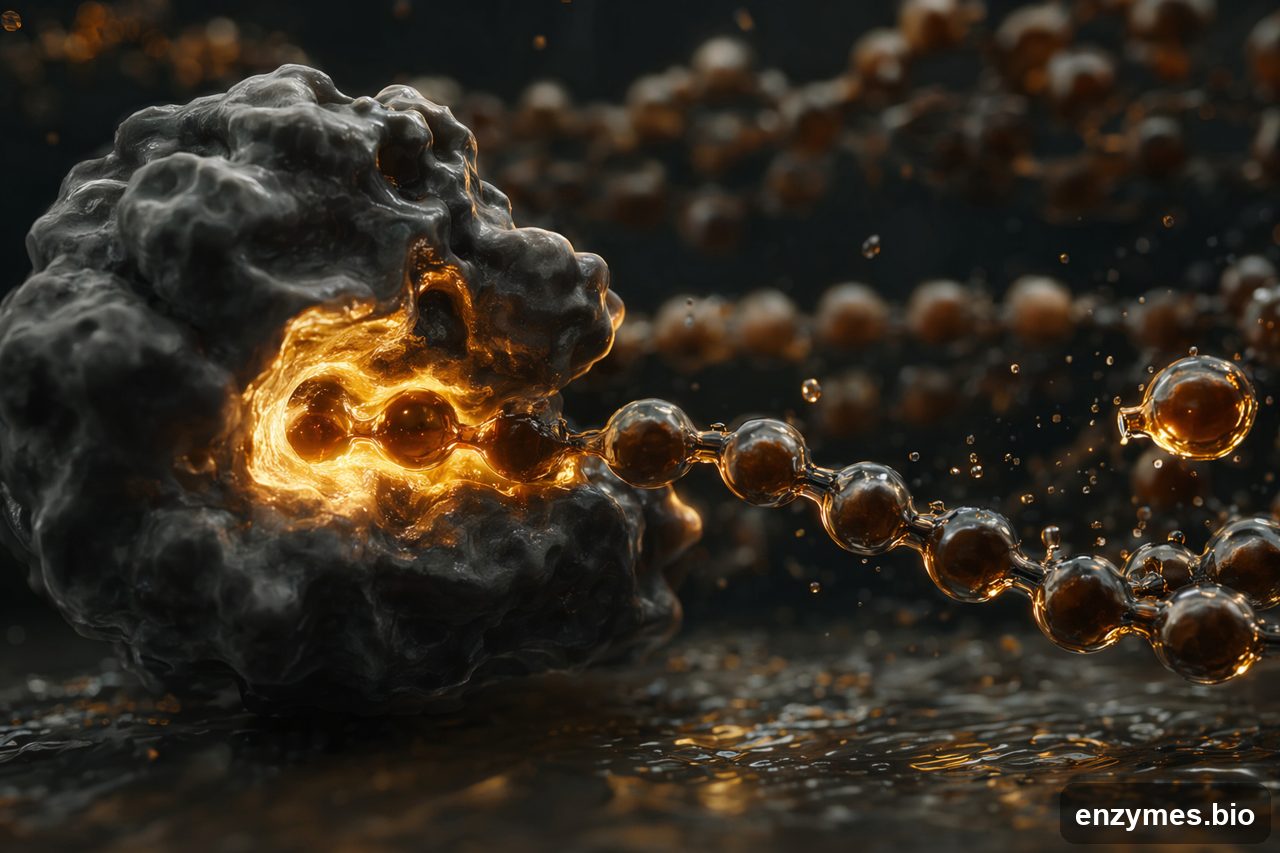
Glucoamylase works exo-wise, meaning it acts from chain ends rather than randomly cutting inside the chain. It removes glucose units one at a time from the non-reducing ends of dextrins.
Its primary action is on alpha-1,4 glucosidic bonds. It can also act on alpha-1,6 branch linkages, but branch conversion is typically slower. For processes targeting very high glucose release or low residual dextrin, glucoamylase is often paired with a debranching enzyme to improve access to branched starch structures.
Why exo-action matters commercially
Because glucoamylase releases glucose sequentially, its value is seen in the final carbohydrate profile:
Higher glucose formation from liquefied starch
Lower residual dextrin content
Improved fermentability
More predictable syrup composition
Better conversion of starch value into usable sugar value
This is why glucoamylase selection is not just a technical decision. It affects yield economics.
Where glucoamylase creates process value
Glucose syrup production
In glucose syrup manufacturing, glucoamylase is used during saccharification to push liquefied starch toward a glucose-rich profile. The enzyme supports higher dextrose formation, improved conversion efficiency, and a more consistent syrup basis for further refining or formulation.
Buyer-relevant outcomes include:
Higher target glucose profile from starch-derived feedstock
Reduced unconverted dextrin load
Cleaner saccharide distribution
More consistent syrup quality across production runs
Better downstream handling when viscosity is controlled upstream and during conversion
Fermentation substrates
Fermentation performance depends on the availability of fermentable sugars. Glucoamylase converts dextrins into glucose that yeast, bacteria, or fungal production organisms can consume more readily.
In fermentation systems, glucoamylase can support:
Increased fermentable sugar availability
Lower residual carbohydrate after fermentation
More stable feedstock conversion
Improved process consistency where starch-based raw materials vary
Better alignment between saccharification and fermentation demand
This is relevant for ethanol, organic acids, amino acids, enzyme production, and other industrial fermentation platforms using starch-based inputs.
Food and beverage processing
For food and beverage applications, glucoamylase is used when controlled starch breakdown, sweetness development, fermentability, or viscosity reduction is needed.
Common process objectives include:
Releasing glucose from starch-derived dextrins
Supporting controlled sweetness and solids balance
Reducing residual dextrin where it affects mouthfeel or filtration
Improving consistency in starch-based ingredient streams
Preparing fermentable substrates for brewing or related processes
The practical value is not simply “more sugar.” It is controlled conversion to the right sugar profile for the finished process.
Key variables that influence glucoamylase performance
Glucoamylase performance depends on the enzyme, the substrate, and the process environment. Small mismatches can affect conversion rate, final glucose profile, and downstream efficiency.
1. Substrate preparation
Poorly gelatinized or under-liquefied starch limits enzyme access. Glucoamylase works best when starch has already been converted into accessible dextrins.
Important substrate questions include:
What starch source is being used?
How consistent is the raw material?
Has the starch been fully gelatinized?
Is the liquefaction stage producing the right dextrin profile?
Are there residual solids or impurities affecting conversion?
2. Dextrin chain length and branching
Shorter, accessible dextrins are easier for glucoamylase to process. Highly branched structures may slow full conversion unless paired with a debranching strategy.
For high-glucose targets, many processors evaluate glucoamylase alongside complementary enzymes rather than treating it as a standalone fix.
3. pH and temperature fit
Glucoamylase must be matched to the operating window of the process. Stability and performance are affected by pH, temperature exposure, residence time, and process interruptions.
The right product is not always the most aggressive option on paper. It is the enzyme that holds conversion reliably under the buyer’s actual production conditions.
4. Residence time and mixing
Saccharification is a contact-driven conversion. Uneven mixing, insufficient hold time, or poor tank flow can reduce conversion uniformity even when the enzyme itself is suitable.
Process teams should assess:
Mixing quality
Hold time
Substrate solids level
Heating and cooling transitions
Batch versus continuous operation
Downstream timing constraints
5. Compatibility with upstream and downstream steps
Glucoamylase does not operate in isolation. It must fit with liquefaction enzymes, debranching enzymes, fermentation organisms, filtration aids, preservatives, cleaning practices, and product specifications.
Compatibility review is especially important when changing suppliers, changing feedstock, or scaling from pilot production to commercial volume.
Glucoamylase versus alpha-amylase
Glucoamylase and alpha-amylase are both starch-processing enzymes, but they play different roles.
Enzyme
Main action
Process role
Typical outcome
Alpha-amylase
Cuts internal alpha-1,4 bonds
Liquefaction
Rapid viscosity reduction and dextrin formation
Glucoamylase
Releases glucose from non-reducing ends
Saccharification
Glucose formation from dextrins
Alpha-amylase opens the structure and reduces viscosity. Glucoamylase finishes conversion toward glucose.
In well-designed starch conversion systems, these enzymes are selected as a sequence, not as substitutes.
What procurement and technical teams should specify
When sourcing glucoamylase, the best outcomes come from process-defined specifications rather than generic product requests.
Before requesting pricing, prepare the following:
Starch source and raw material variability
Current liquefaction approach
Target glucose profile or conversion endpoint
Batch or continuous operating mode
Expected pH and temperature conditions
Saccharification residence time
Solids level and viscosity constraints
Downstream use: syrup, fermentation, food, beverage, or other industrial process
Packaging preference and expected order volume
Any compliance, documentation, or country-specific import requirements
This helps Sacchera recommend a commercially realistic glucoamylase option rather than a laboratory-perfect answer that does not fit production.
Common troubleshooting signals
If starch conversion is not reaching target, glucoamylase may be part of the issue — but it is not always the only variable.
Low glucose formation
Possible causes:
Incomplete gelatinization
Poor liquefaction quality
Insufficient residence time
pH or temperature mismatch
Enzyme deactivation during processing
Branch structures limiting complete conversion
High residual dextrin
Possible causes:
Dextrin profile not optimized upstream
Limited access to branched structures
Inadequate saccharification conditions
Need for complementary debranching support
Process hold time too short for target profile
Variable batch performance
Possible causes:
Raw material inconsistency
Uneven tank mixing
Unstable thermal control
Variable slurry solids
Inconsistent timing between liquefaction and saccharification
A good technical review looks at the full conversion chain, not only the enzyme label.
How Sacchera positions glucoamylase supply
Sacchera focuses on glucoamylase as a production enzyme for industrial starch conversion, not as a generic catalog item. The goal is to align enzyme selection with commercial outcomes: conversion efficiency, process reliability, supply continuity, and downstream fit.
For buyers, that means clear discussion around:
Application target
Feedstock and process conditions
Product format suitability
Packaging and logistics
Documentation requirements
Scale-up risk
Pricing structure and supply planning
The strongest glucoamylase decision is the one that works in the plant, not only in a sample vial.
Request glucoamylase pricing
If you are evaluating glucoamylase for starch hydrolysis, glucose syrup production, fermentation substrate preparation, or food and beverage processing, send Sacchera your process requirements. The team will review fit, format, documentation needs, and commercial supply options.
Prefer a direct commercial review? Use the same form and note that you want to get pricing for glucoamylase supply.