Glucoamylase in High-Gravity Fermentation | Sacchera
Technical guide to using glucoamylase for high-gravity beverage alcohol and fuel ethanol fermentation, covering fermentable sugar release, viscosity control, yield stability, and process integration.
High DE potentialLow residual dextrinFermentation-ready
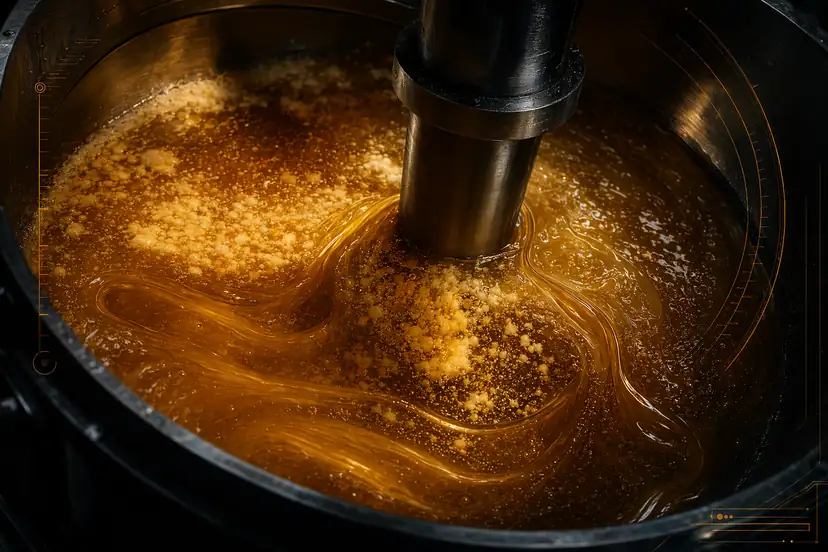
High-gravity fermentation asks more of every upstream and downstream operation: more dissolved solids, higher osmotic pressure, heavier mash, tighter residence time, and less room for inconsistent carbohydrate conversion. In this environment, glucoamylase is not a commodity add-on. It is a yield-control tool.
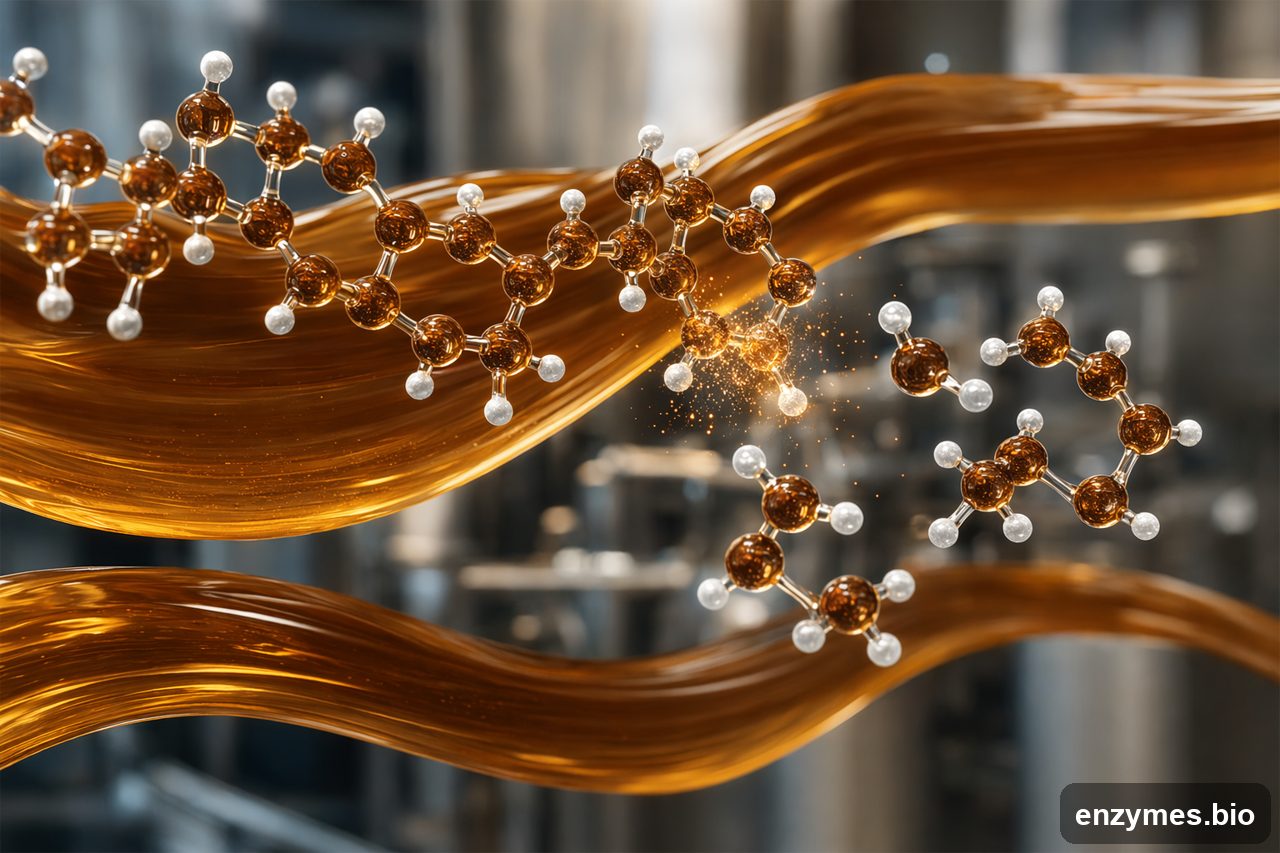
Glucoamylase, also known as amyloglucosidase or glucan 1,4-alpha-glucosidase, releases glucose from starch-derived dextrins by working from non-reducing chain ends. For beverage alcohol and fuel ethanol producers, its role is straightforward: convert liquefied starch fragments into fermentable glucose so yeast can convert more of the available carbohydrate into alcohol.
In high-gravity systems, the difference between adequate and well-controlled glucoamylase performance shows up in practical metrics: final attenuation, residual dextrin profile, fermentation time, viscosity, alcohol yield, and batch-to-batch predictability.
Why high-gravity fermentation changes the enzyme requirement
High-gravity operation increases the concentration of fermentable material entering the fermenter. That can improve plant productivity, reduce water use, and increase alcohol output per vessel cycle. It also makes the process less forgiving.
Common constraints include:
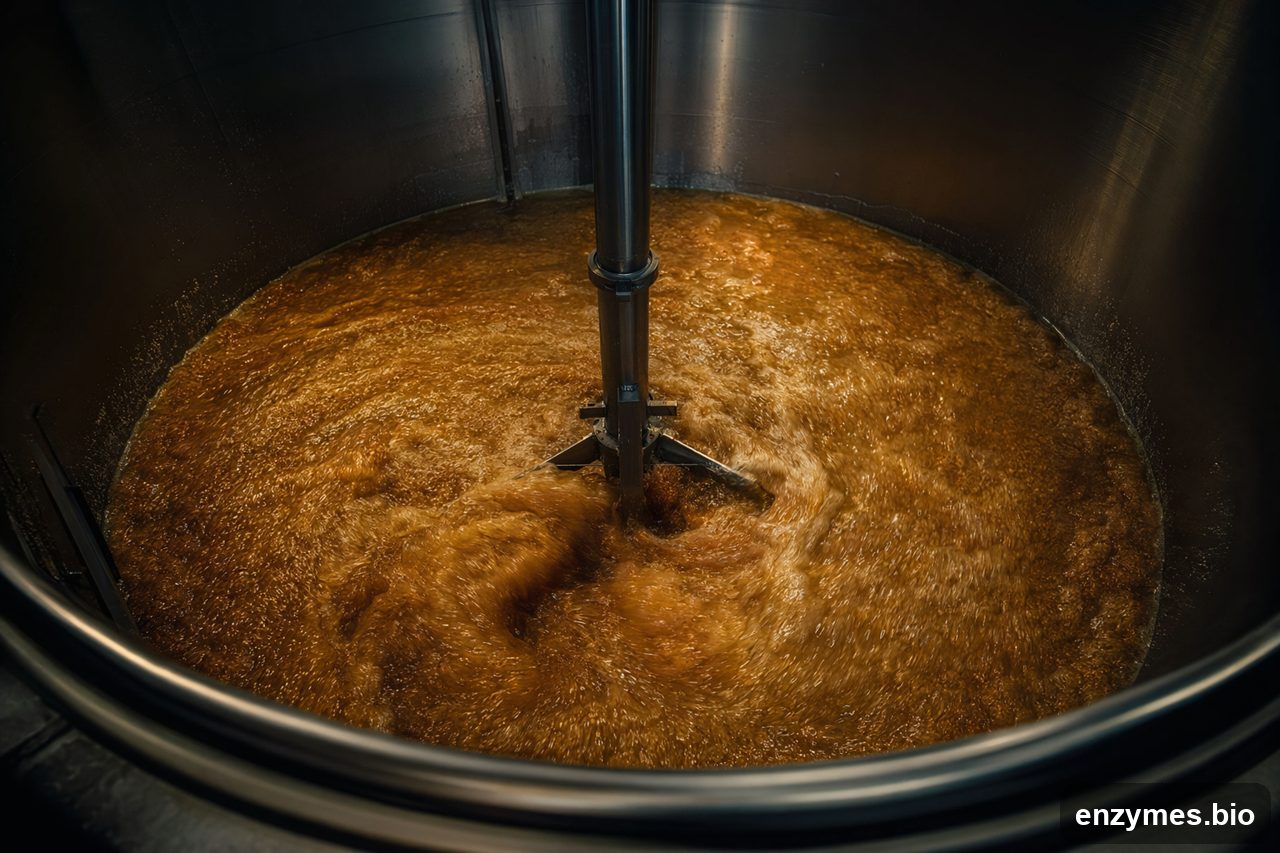
High mash viscosity that limits mixing, heat transfer, and pumpability
Incomplete dextrin conversion that leaves fermentable value in the stillage or beer
Delayed glucose availability that slows yeast metabolism
Stress on yeast from high dissolved solids and rising ethanol concentration
Greater sensitivity to temperature, pH, residence time, and raw material variation
Glucoamylase helps manage these constraints by continuously increasing the pool of fermentable glucose after liquefaction. When matched to the process, it supports more complete carbohydrate utilization without requiring major changes to core plant equipment.
What glucoamylase does in the fermentation train
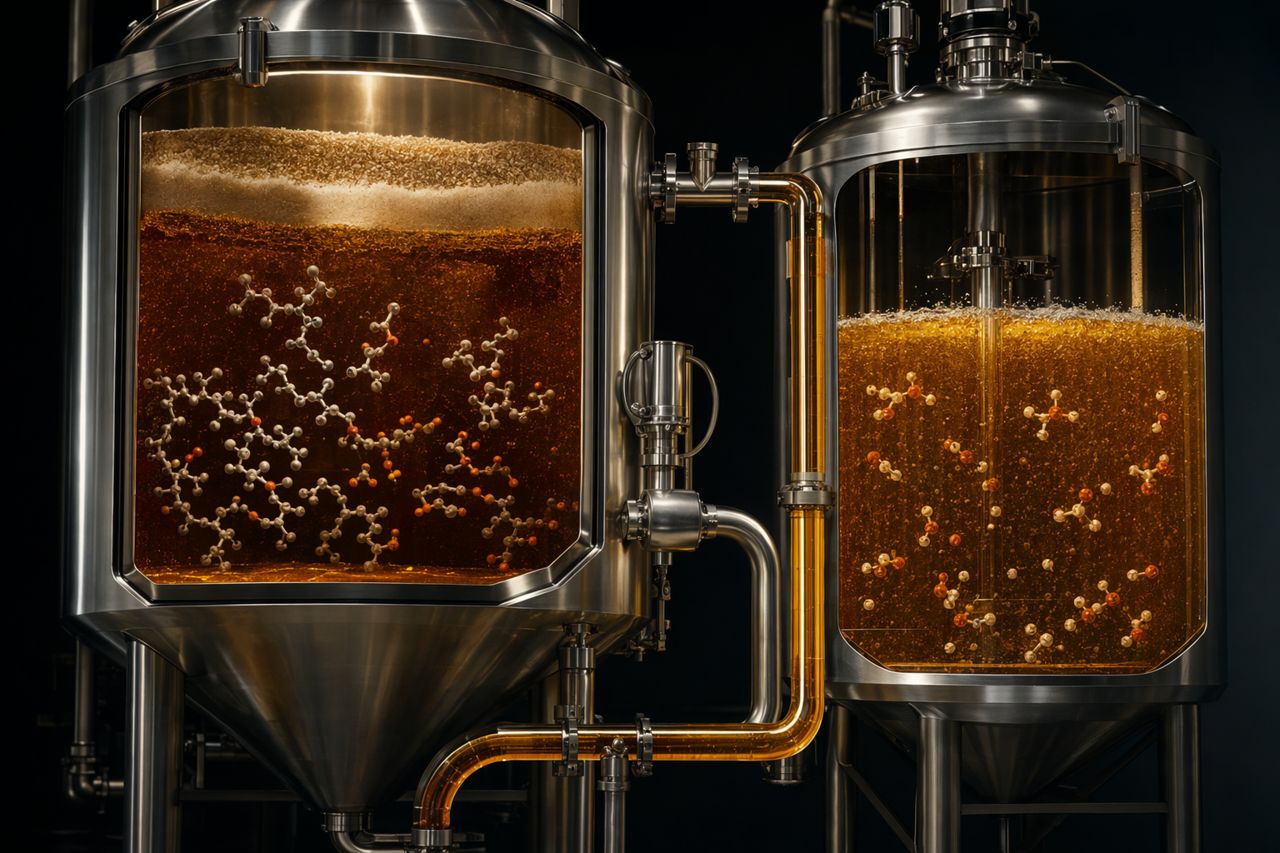
Most high-gravity starch processes rely on a coordinated enzyme sequence. Alpha-amylase first liquefies gelatinized starch, reducing long-chain polymers into shorter dextrins. Glucoamylase then saccharifies those dextrins into glucose.
Depending on plant design, glucoamylase may be applied in:
Separate saccharification before fermentation
The mash is converted toward a glucose-rich profile before yeast addition. This can give more predictable fermenter loading and faster early fermentation kinetics.
Simultaneous saccharification and fermentation
Glucoamylase is active during fermentation, releasing glucose as yeast consumes it. This approach can reduce glucose shock and support continuous sugar availability.
Hybrid conversion strategies
A partial saccharification step is followed by continued enzymatic conversion in the fermenter. This is common when plants need both process flexibility and strong final attenuation.
The best configuration depends on raw material, cook profile, liquefaction efficiency, yeast strain, target alcohol level, and required throughput.
Commercial benefits in high-gravity production
Higher fermentable sugar release
High-gravity fermentation only delivers value when carbohydrate conversion keeps pace with solids loading. Glucoamylase improves the conversion of dextrins into glucose, giving yeast access to more fermentable substrate.
For producers, this can support:
Higher alcohol yield from the same starch input
Lower residual fermentable carbohydrate
More complete attenuation
Better consistency across grain or feedstock variation
Lower viscosity and better fermenter handling
While liquefaction does most of the early viscosity reduction, incomplete dextrin breakdown can still create handling issues in dense mashes. Glucoamylase contributes to a lower-molecular-weight carbohydrate profile, helping the process move toward improved flow behavior.
Operationally, this can mean:
More reliable agitation
Reduced localized concentration gradients
Better contact between enzyme, substrate, and yeast
More stable pumping and transfer behavior
More stable fermentation kinetics
High-gravity fermentations can become uneven when sugars are released too slowly, too rapidly, or inconsistently across batches. Properly selected glucoamylase supports a steadier glucose supply, helping yeast maintain productive metabolism.
This is especially important where plants are pushing:
Shorter fermentation cycles
Higher final alcohol targets
Variable grain lots or starch sources
Increased vessel utilization
Improved process economics
The commercial case for glucoamylase is not based on enzyme cost alone. It should be evaluated against plant-level outcomes:
Alcohol output per batch
Residual starch and dextrin losses
Fermenter cycle time
Rework or off-spec risk
Downstream energy burden
Raw material utilization
A lower-cost enzyme that leaves carbohydrate behind can be more expensive than a stronger process fit.
Key formulation and process considerations
pH and temperature alignment
Glucoamylase performance depends on where it is used in the process. Separate saccharification, hybrid saccharification, and fermentation-stage addition each expose the enzyme to different pH, temperature, residence time, and substrate conditions.
The goal is not simply maximum laboratory activity. The goal is practical conversion under the plant’s real operating window.
Substrate accessibility
High-gravity mashes can limit enzyme access if liquefaction is incomplete or mixing is poor. Sacchera recommends evaluating glucoamylase alongside liquefaction quality, solids loading, mash viscosity, and the dextrin profile entering saccharification or fermentation.
If the substrate is not accessible, increasing enzyme addition alone may not solve the problem.
Yeast compatibility
In simultaneous saccharification and fermentation, glucoamylase and yeast operate in the same environment. The enzyme should support sugar release without creating process shocks that compromise yeast performance.
Important factors include:
Glucose release rate
Yeast nutrient status
Ethanol tolerance
Fermentation temperature profile
Contamination control strategy
Feedstock variability
Corn, wheat, cassava, sorghum, broken rice, and other starch sources differ in starch structure, protein matrix, fiber, gelatinization behavior, and liquefaction response. High-gravity fermentation amplifies these differences.
A robust glucoamylase program should be validated across representative raw material lots, not only ideal samples.
Where Sacchera glucoamylase fits
Sacchera is built for industrial carbohydrate conversion teams that need predictable performance, clear documentation, and commercially usable support.
For high-gravity fermentation, Sacchera glucoamylase is positioned for:
Beverage alcohol fermentation
Fuel ethanol production
Grain-neutral spirit production
Starch-to-alcohol processing
High-solids saccharification workflows
Simultaneous saccharification and fermentation systems
Our technical conversation typically focuses on the operating window, feedstock, solids loading, liquefaction quality, yeast platform, target cycle time, and final alcohol goals. From there, we help define a practical evaluation plan that procurement and production teams can both use.
Practical evaluation checklist
Before selecting or changing a glucoamylase, capture the baseline. The following data points help determine whether the enzyme is the limiting factor or whether the bottleneck sits upstream.
Process data to review
Feedstock type and seasonal variation
Grind profile and mash preparation method
Liquefaction temperature and hold strategy
Mash viscosity trend
Dextrin and glucose profile entering fermentation
Fermentation temperature and pH profile
Yeast strain and propagation method
Final alcohol concentration
Residual carbohydrate at endpoint
Fermentation cycle time
Distillation or evaporation constraints
Trial design priorities
A meaningful plant or pilot trial should compare more than one endpoint. Look at conversion, fermentation kinetics, alcohol yield, residual carbohydrate, handling behavior, and operating stability.
Good trial questions include:
Does glucose release match yeast demand?
Does final attenuation improve?
Does endpoint arrive sooner or more consistently?
Does viscosity improve enough to affect handling?
Does performance hold across feedstock variation?
Does the enzyme reduce total process cost, not just ingredient cost?
Troubleshooting high-gravity fermentation with glucoamylase
Issue: Residual dextrins remain high
Possible causes:
Insufficient saccharification residence time
Poor liquefaction or incomplete starch gelatinization
Enzyme exposure outside the effective process window
Limited mixing in dense mash
Feedstock structure limiting substrate access
Recommended review:
Confirm liquefaction quality before changing saccharification strategy
Check whether dextrin conversion slows at a predictable point
Compare separate versus simultaneous conversion options
Issue: Fermentation starts quickly but finishes slowly
Possible causes:
Early glucose availability is strong, but later dextrin conversion is limited
Yeast stress increases as ethanol rises
Temperature or pH drift reduces enzyme effectiveness
Nutrient balance limits yeast metabolism
Recommended review:
Track sugar release and alcohol formation across the full cycle
Evaluate whether later-stage glucoamylase performance is adequate
Review yeast health and nutrient program alongside enzyme use
Issue: Mash handling is inconsistent
Possible causes:
Variable feedstock or grind profile
Liquefaction instability
Incomplete dextrin breakdown
Insufficient mixing at high solids
Recommended review:
Compare viscosity behavior by raw material lot
Confirm enzyme addition point and dispersion
Assess whether upstream liquefaction needs correction before saccharification changes
Procurement notes for industrial buyers
When buying glucoamylase for high-gravity fermentation, price per container is only one part of the decision. Ask for evidence that connects the enzyme to production outcomes.
Useful purchasing criteria include:
Fit with your pH and temperature window
Performance in high-solids mash conditions
Compatibility with your fermentation strategy
Supply reliability and packaging suitability
Documentation for industrial use
Technical support during validation
Total cost contribution per unit of alcohol produced
Sacchera supports practical qualification discussions for production, procurement, and formulation teams. We keep the focus on plant performance, not generic enzyme claims.
Embedded explainer video
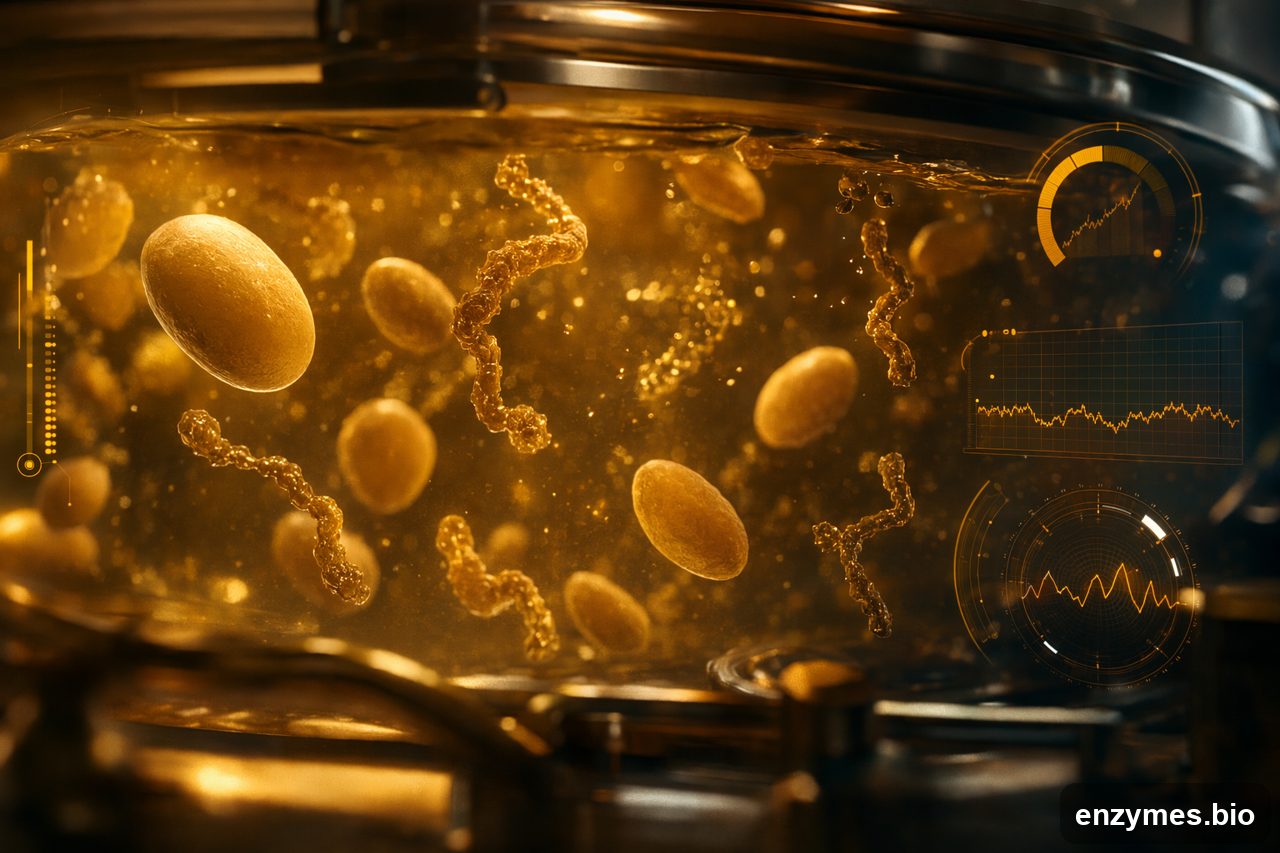
Video: A one-minute faceless technical explainer showing starch granules converting into glucose-rich syrup inside a high-gravity fermentation workflow, with on-screen subtitles and industrial process visuals.
Request pricing or technical fit support
If you are evaluating glucoamylase for a high-gravity fermentation line, send your process context and target outcome. Sacchera can help you structure a qualification plan for yield, attenuation, cycle time, and operating consistency.
Bottom line
In high-gravity fermentation, glucoamylase is a conversion control point. The right enzyme program helps release fermentable glucose, reduce residual carbohydrate, stabilize fermentation kinetics, and protect yield as solids loading rises.
Sacchera gives industrial teams a clear path to evaluate glucoamylase where it matters: in the plant, under real process constraints, against measurable production outcomes.