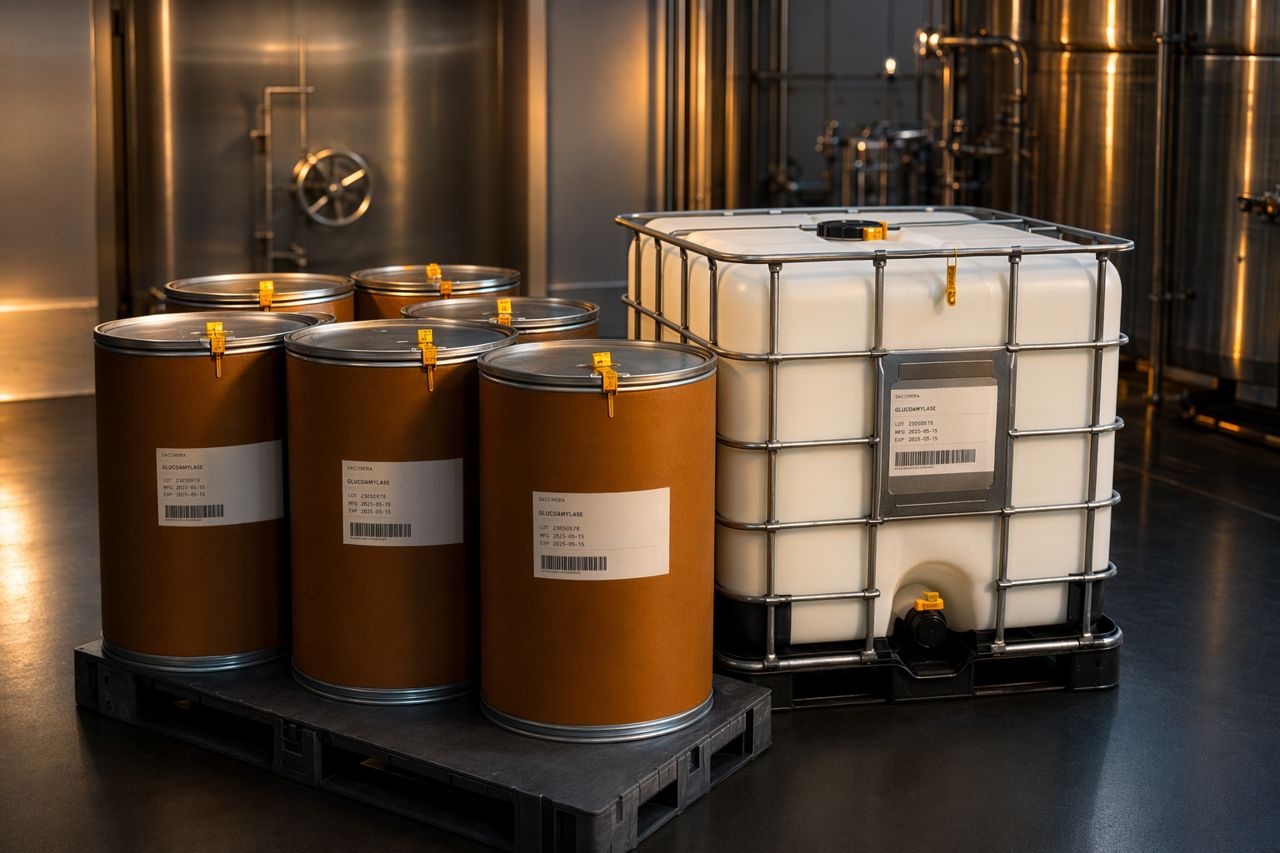
Bulk glucoamylase is a process-critical enzyme, not a generic warehouse item. How it is received, stored, transferred, and staged can affect batch consistency, sugar release, filtration behavior, and downstream fermentation performance.
This guide gives procurement, production, QA, and warehouse teams a practical baseline for handling glucoamylase in bulk formats. Always follow the product-specific technical data sheet, safety data sheet, and your internal quality procedures for the exact material supplied.
Why handling discipline matters
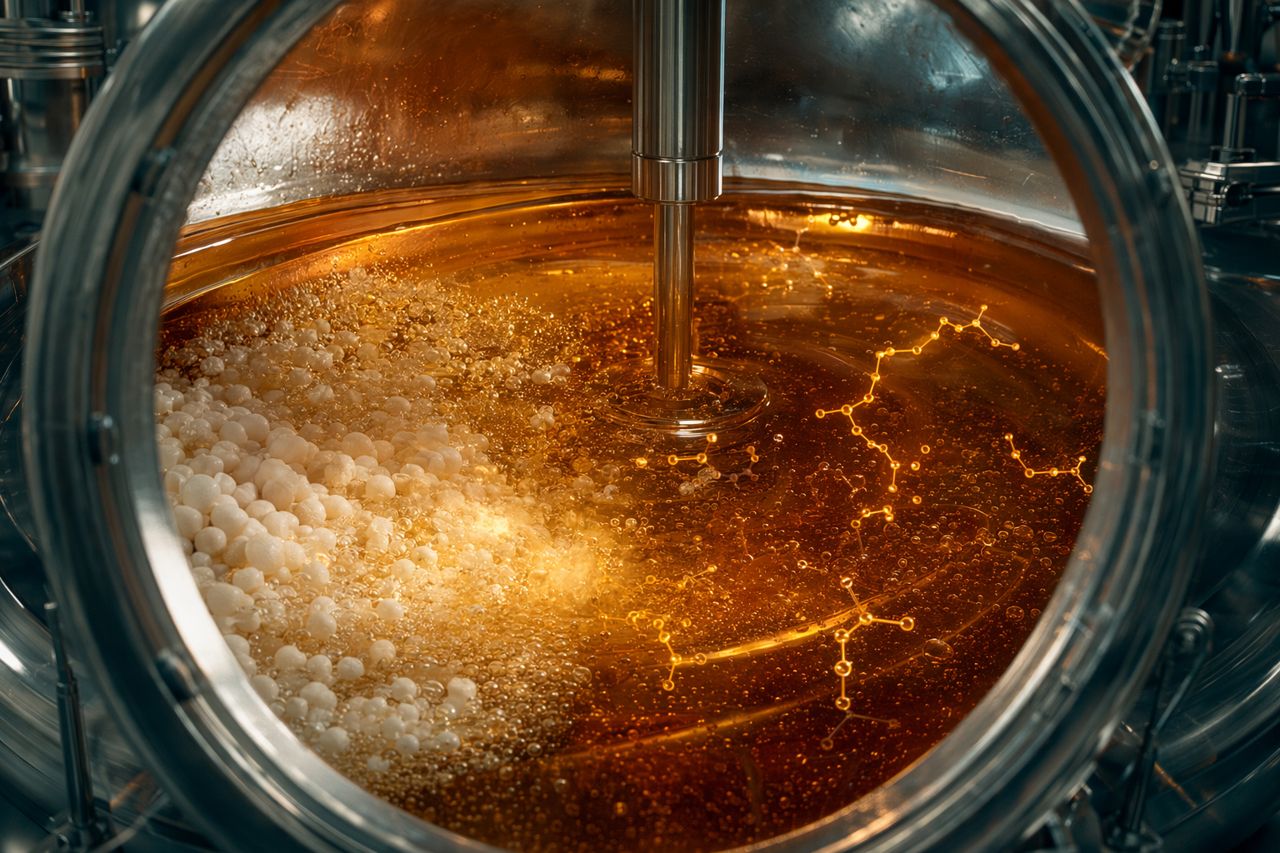
Glucoamylase converts dextrins and starch-derived chains into fermentable glucose. In commercial use, it is selected for predictable saccharification, viscosity reduction, and high conversion efficiency.
Poor storage or handling can introduce avoidable risk:
Reduced enzyme performance over time
Inconsistent dosing response between lots or containers
Contamination during transfer or partial-use storage
Packaging damage, leaks, or moisture exposure
Production delays caused by missing documentation or temperature excursions
The objective is simple: keep the enzyme clean, sealed, traceable, and within its approved storage conditions until use.
Receiving bulk glucoamylase
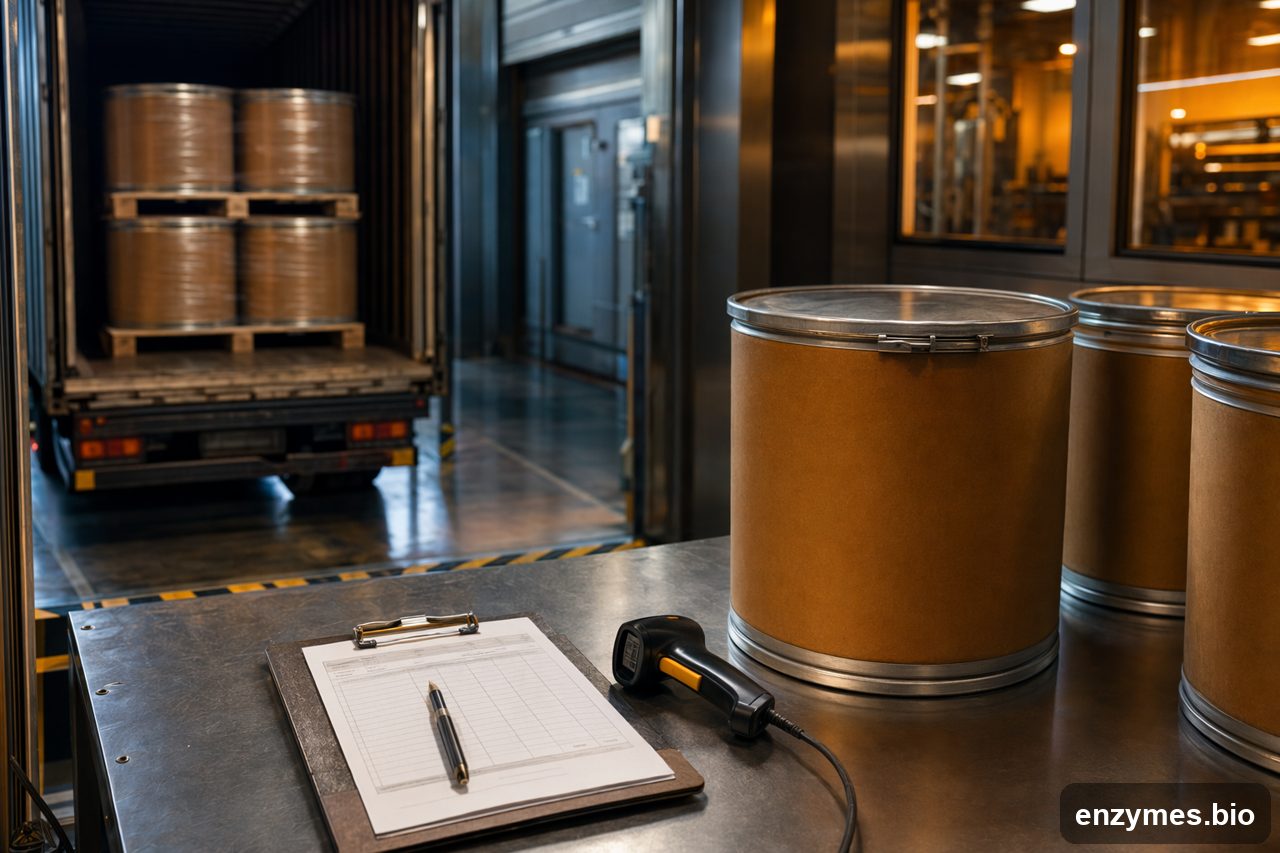
Treat receiving as the first control point in the process, not as a clerical step.
Check documentation before release
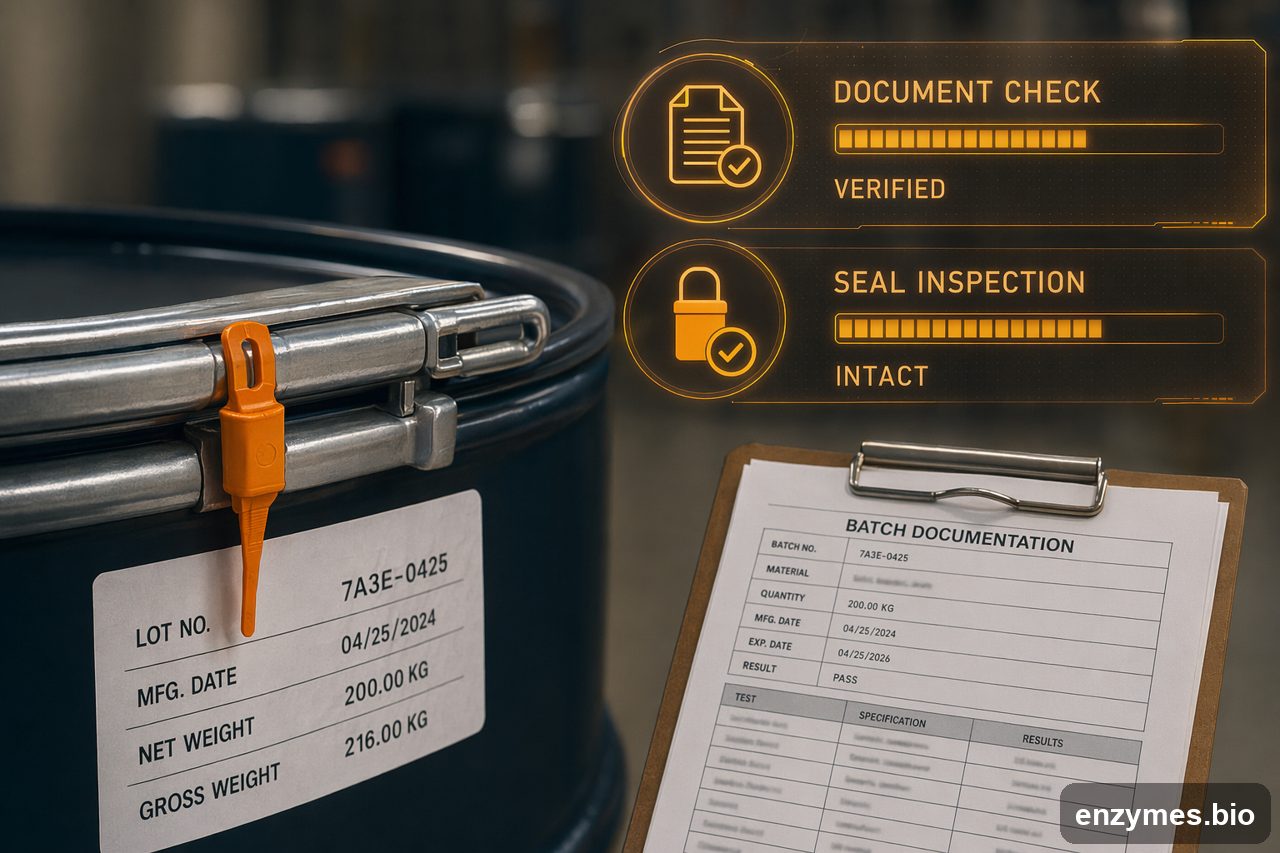
Before moving material into approved inventory, confirm that the shipment includes the documents required by your site. Common documents include:
Certificate of Analysis or batch quality document
Safety Data Sheet
Product specification or technical data sheet
Allergen, non-GMO, food-grade, feed-grade, kosher, halal, or regulatory statements if applicable
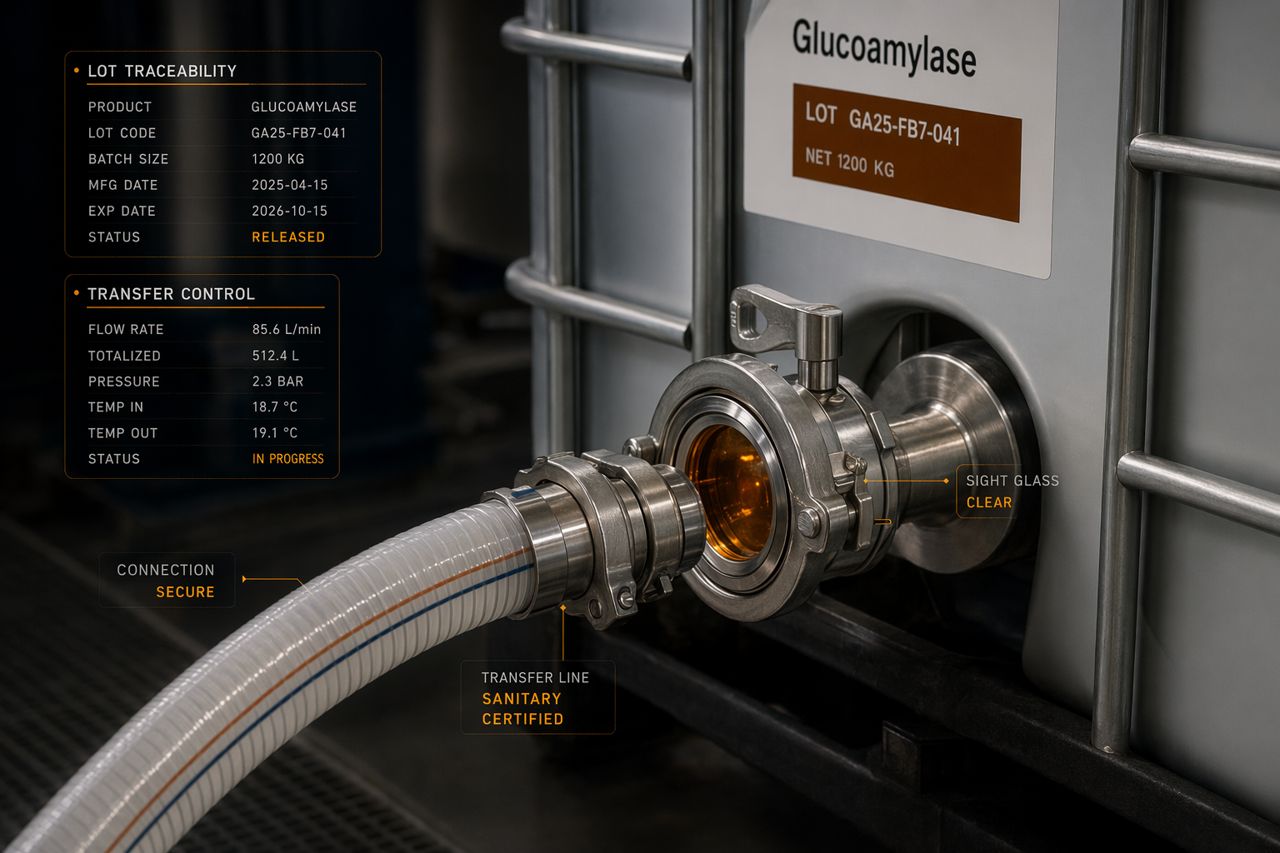
Lot number, manufacturing date, and retest or expiry date
Document requirements vary by application. A food syrup plant, fuel ethanol facility, brewery, and enzyme formulation site may require different release packages.
Inspect packaging condition
On arrival, inspect containers before accepting them into controlled storage.
Look for:
Broken seals or tamper evidence
Drum dents near seams, bungs, or closure points
Swelling, leakage, residue, or staining
Torn bags, punctures, or moisture marks on cartons
Mismatched labels or illegible lot codes
Evidence of freezing, overheating, or improper transit exposure
Quarantine questionable containers until QA or procurement resolves the deviation. Do not blend suspect material into production inventory to “average out” risk.
Storage basics for liquid glucoamylase
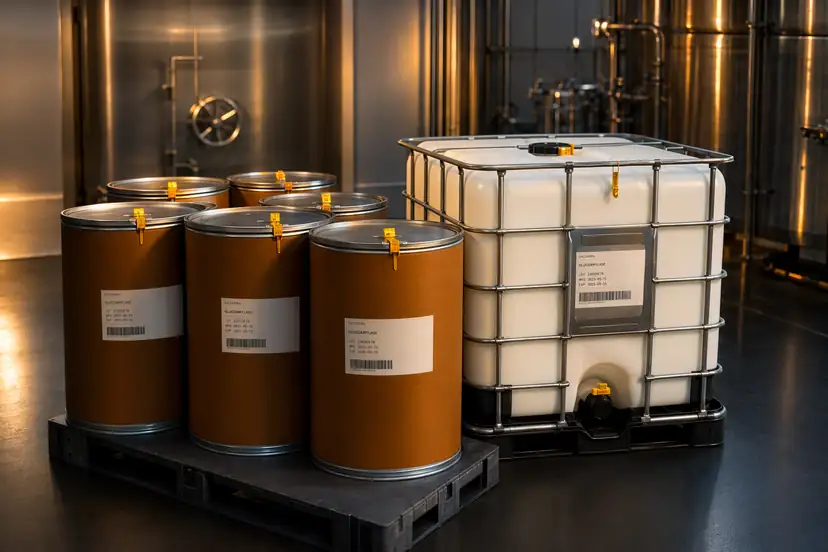
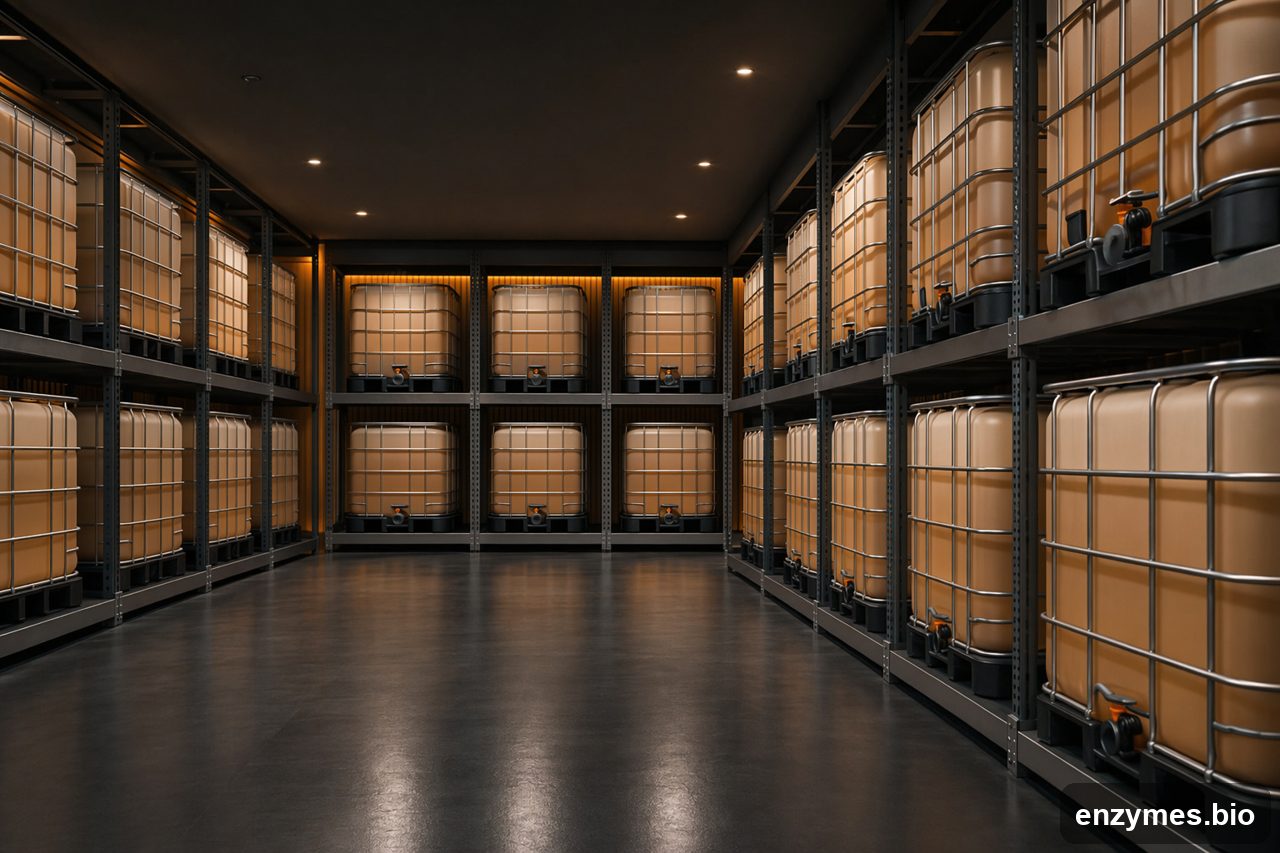
Liquid glucoamylase is commonly supplied in drums, totes, or bulk containers. The main storage priorities are temperature control, seal integrity, hygiene, and lot traceability.
Keep within the approved storage range
Store liquid glucoamylase within the supplier’s stated conditions. Avoid uncontrolled heat, direct sunlight, and prolonged exposure in hot staging areas.
Key practices:
Store in a clean, shaded, temperature-controlled area
Avoid placement near boilers, steam lines, hot process vessels, or exterior doors with high heat exposure
Prevent freezing unless the product documentation confirms freeze-thaw tolerance
Record and investigate temperature excursions according to your quality system
A single short excursion may not automatically make material unusable, but it should be assessed rather than ignored.
Keep containers sealed until use
Open containers only when ready to transfer or dose. Once opened, reseal immediately after use and limit headspace exposure where practical.
Good practice includes:
Using clean, dedicated transfer equipment
Keeping bungs, caps, gaskets, and closures off contaminated surfaces
Avoiding return of unused material from process lines back into the original container
Preventing splash, dust, rinse water, and airborne debris from entering opened drums or totes
Enzymes are biological catalysts. They do not need to be sterile in every industrial application, but unnecessary contamination can create avoidable process and quality issues.
Storage basics for powder or granulated glucoamylase
Dry glucoamylase formats require strong moisture control. Humidity exposure can lead to clumping, flow problems, localized degradation, and poor handling behavior.
Control moisture and dust
Store dry enzyme products in original sealed packaging until use. Keep them off wet floors and away from washdown zones.
Recommended controls:
Store in a dry, clean, covered warehouse area
Keep bags or cartons on pallets, not directly on concrete floors
Reseal partial containers tightly after dispensing
Avoid scoops, funnels, or feeders with residual water
Minimize dust generation during charging and transfer
Use appropriate respiratory, eye, and skin protection based on the SDS and your site risk assessment. Enzyme dust can be sensitizing; avoid practices that create airborne powder.
FIFO, lot control, and traceability
Use first-expire-first-out or first-in-first-out inventory rotation, depending on your quality system. For most B2B enzyme users, lot traceability should connect the enzyme container to the finished batch, fermentation run, or formulation lot.
Maintain records for:
Supplier lot number
Internal material code
Receipt date
Storage location
Container opening date
Quantity issued
Production batch or run number
Deviations, holds, or temperature excursions
For multi-site buyers, align the same traceability rules across plants. This reduces investigation time if a performance question arises later.
Transfer and dosing hygiene
The highest handling risk often occurs after the container is opened.
For liquid transfer
Use transfer pumps, hoses, dip tubes, and fittings that are clean, compatible, and assigned to appropriate material categories.
Practical controls:
Flush or clean lines according to your site procedure before campaign changeover
Avoid dead legs where residue can remain between uses
Protect open hose ends from floor contact
Use closed transfer where practical
Label temporary vessels clearly with material name and lot number
For dry addition
When adding dry glucoamylase to mixers, make-up tanks, or formulation systems, control dust and prevent moisture uptake.
Practical controls:
Add slowly enough to avoid dust clouds
Use local extraction or enclosed charging when required
Keep packaging closed between additions
Do not use wet scoops or damp weighing vessels
Clean spills with methods that avoid dispersing enzyme dust
Compatibility considerations
Glucoamylase is generally used in aqueous starch, mash, syrup, brewing, ethanol, and fermentation environments, but compatibility still matters.
Before implementation, confirm that the product is suitable for your process conditions, including:
pH profile during saccharification or fermentation
Process temperature and hold time
Presence of preservatives, salts, solvents, oxidizers, or cleaning residues
CIP carryover risk
Contact with other enzymes in blended applications
Food, feed, technical, or fermentation regulatory requirements
Do not assume interchangeability between enzyme formats or grades. Two glucoamylase products can differ in stabilization system, carrier, viscosity, pH tolerance, impurity profile, and application fit.
Shelf life and retest planning
Shelf life is product-specific. Use the retest or expiry date assigned to the lot and store under approved conditions.
Operationally, teams should plan around these realities:
Do not overbuy beyond realistic consumption if storage control is limited
Stage material close to use date, not weeks in advance in uncontrolled areas
Flag slow-moving lots before expiry approaches
Request supplier guidance before using aged or temperature-exposed material
Avoid mixing expired, suspect, or undocumented containers into active inventory
For procurement, the lowest delivered price is not always the lowest operating cost if the package size, shelf-life window, or storage requirement does not match plant consumption.
Spill and exposure basics
Follow the SDS and your internal EHS procedure for all spills and exposure incidents.
General handling principles:
Avoid inhalation of enzyme aerosols or dust
Avoid skin and eye contact
Wear PPE appropriate to the format and task
Contain liquid spills before they reach drains unless your procedure permits discharge
Clean dry spills without sweeping enzyme dust into the air
Dispose of waste according to site and local requirements
Train warehouse and production teams before first receipt. Do not wait for a spill, leak, or sensitization concern to define the procedure.
Bulk packaging questions to settle before ordering
Before placing a bulk glucoamylase order, align the package with your receiving, storage, and dosing system.
Ask internally:
Can the warehouse store the product under the required conditions?
Are drums, totes, bags, or cartons preferred by the plant?
Is the dosing system designed for liquid, dry, or both?
Can partial containers be resealed and tracked properly?
What documentation must arrive with each lot?
How quickly will the site consume the minimum order quantity?
Are food, feed, alcohol, or export compliance documents required?
Clear answers reduce changeovers, repacking, claims, and emergency substitutions.
Handling checklist for glucoamylase buyers
Use this checklist when qualifying a bulk supply program:
Product format matches dosing equipment
Storage conditions match warehouse capability
Packaging size matches consumption rate
Lot documents match QA release requirements
Receiving inspection criteria are defined
FIFO or expiry-based rotation is in place
Open-container handling procedure is written
PPE and spill response are aligned with the SDS
Temperature excursion process is defined
Technical contact path is clear before production use
Need bulk glucoamylase pricing or storage guidance?
Sacchera supports bulk buyers with application-fit discussions, documentation review, and packaging alignment for commercial glucoamylase supply.
Use the form below to request pricing, confirm availability, or ask which format fits your process.