Glucoamylase vs Alpha Amylase: Roles in Starch Processing
Compare glucoamylase and alpha amylase for industrial starch conversion, including liquefaction, saccharification, glucose yield, viscosity control, and enzyme selection.
High DE potentialLow residual dextrinFermentation-ready
Glucoamylase vs Alpha Amylase: Different Jobs in Starch Processing
Industrial starch conversion is not a single-enzyme problem. Alpha amylase and glucoamylase are often used in the same process, but they are not interchangeable.
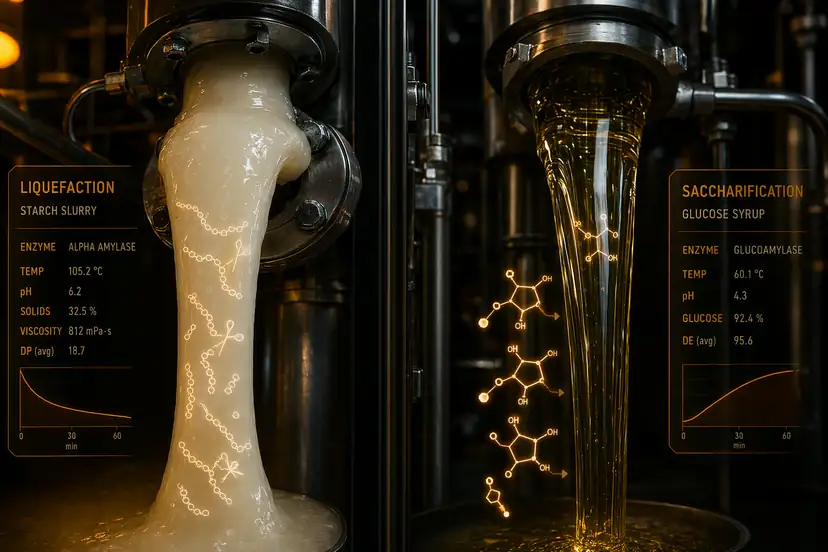
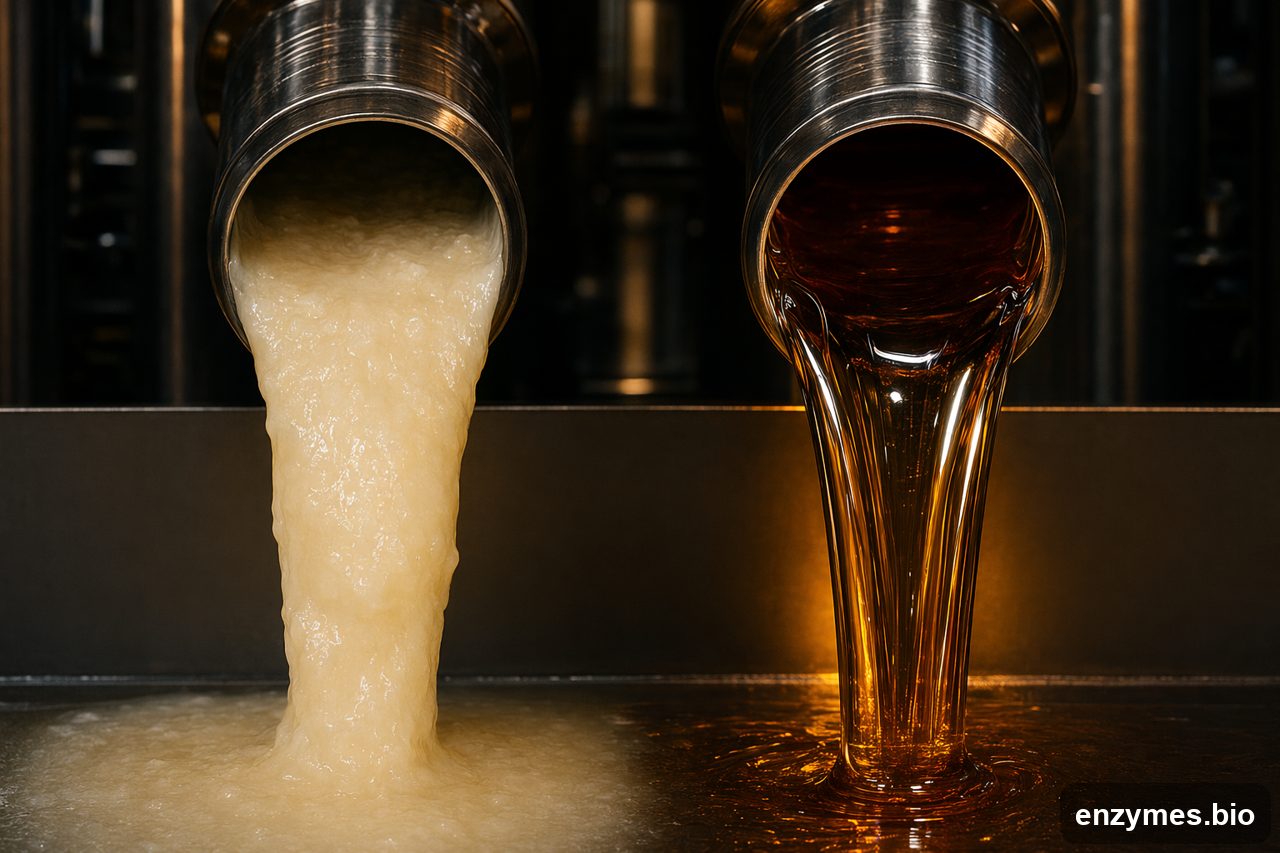
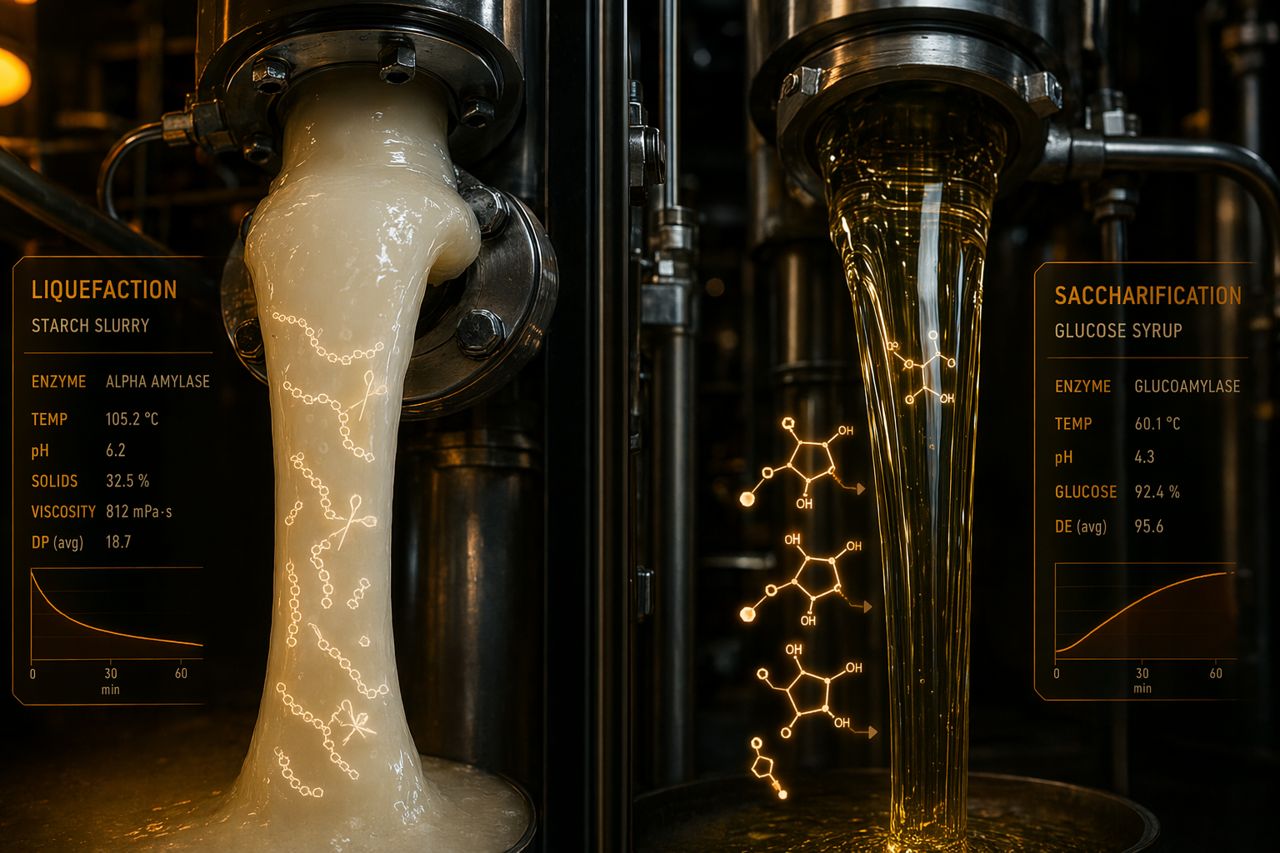
Alpha amylase is primarily a liquefaction tool. It reduces starch slurry viscosity by cutting long starch chains into shorter dextrins.
Glucoamylase, also known as amyloglucosidase or glucan 1,4-alpha-glucosidase, is primarily a saccharification tool. It releases glucose from dextrins, helping drive fermentable sugar formation and high-glucose syrup production.
For process engineers, fermentation teams, and procurement groups, the practical question is not simply which enzyme is better. The better question is: which conversion step are you trying to control?
The short answer
Question
Alpha amylase
Glucoamylase
Main process role
Liquefaction
Saccharification
Primary commercial value
Rapid viscosity reduction
High glucose release
Action pattern
Internal chain cleavage
End-chain glucose release
Typical substrate stage
Gelatinized starch slurry
Liquefied dextrin stream
Output profile
Shorter dextrins
Glucose-rich syrup or fermentable sugar
Buyer concern
Heat stability, viscosity control, process flow
Glucose yield, conversion consistency, downstream fermentation or syrup spec
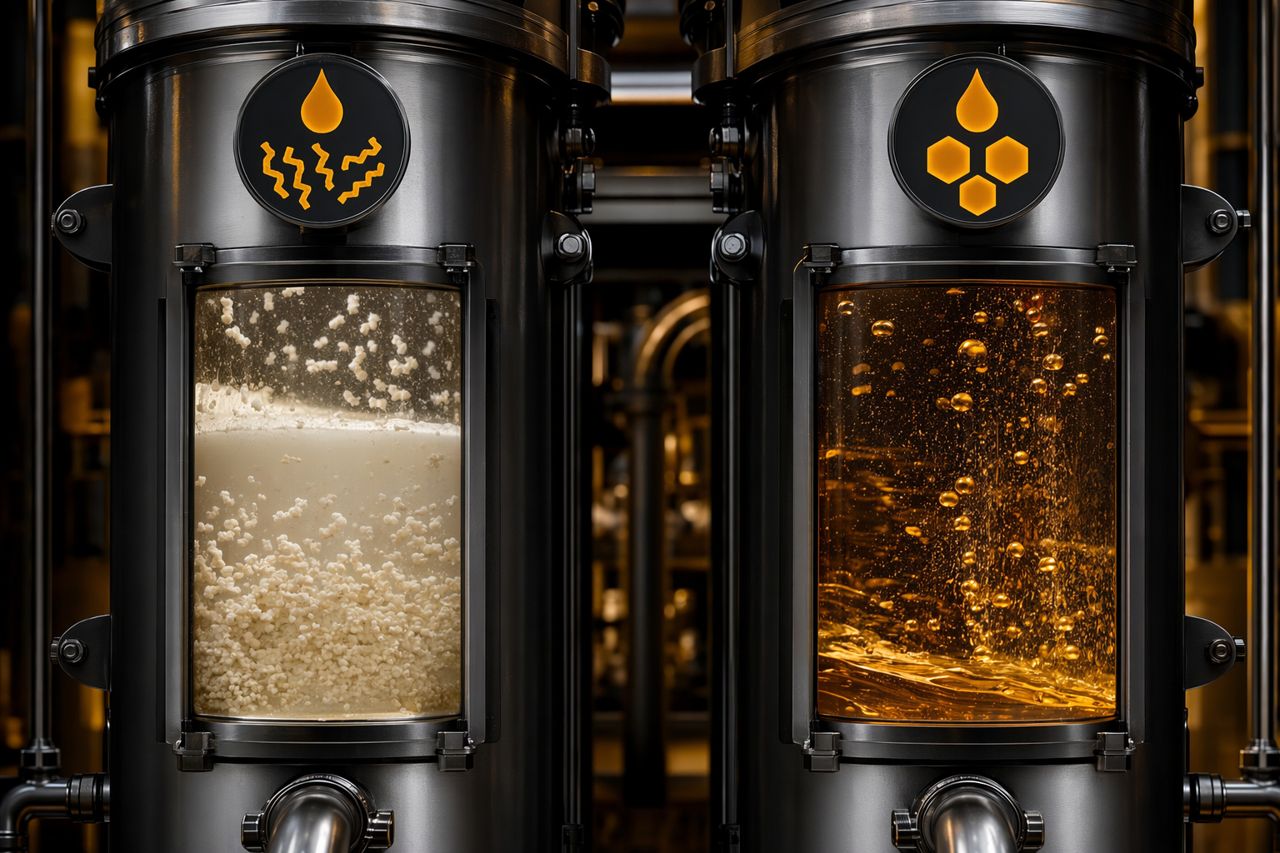
In most starch processes, alpha amylase comes first. Glucoamylase follows.
Alpha amylase opens the process. Glucoamylase finishes the conversion.
What alpha amylase does
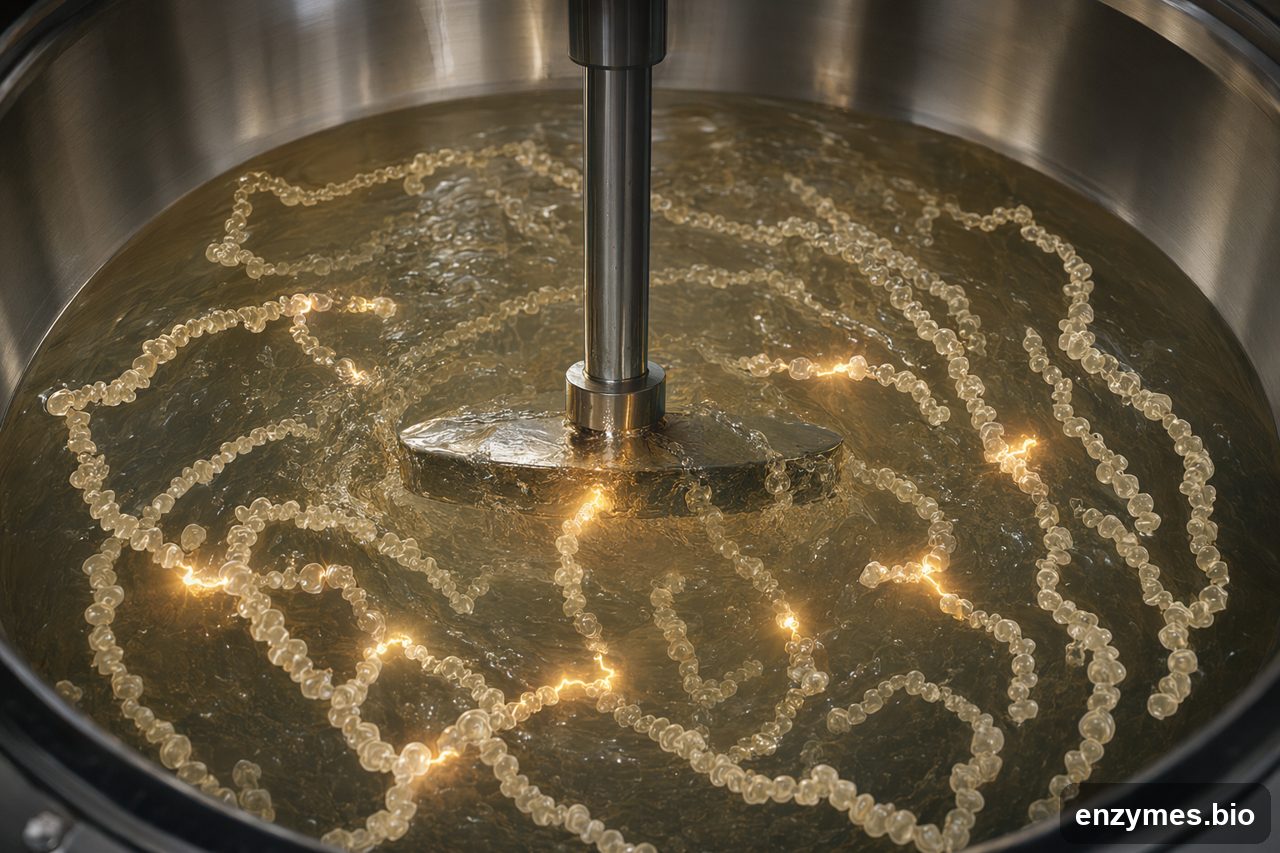
Alpha amylase is an endo-acting enzyme. It cuts internal alpha-1,4 glycosidic bonds within starch chains.
That internal cutting pattern matters commercially. By attacking the middle of long amylose and amylopectin chains, alpha amylase rapidly breaks down large starch molecules into smaller soluble dextrins. The immediate process benefit is lower viscosity.
Why viscosity reduction matters
In starch processing, high viscosity creates operational friction:
harder pumping
less efficient mixing
uneven heat transfer
higher load on agitation equipment
inconsistent enzyme contact
risk of localized overprocessing or underprocessing
Alpha amylase helps convert a thick, gelatinized starch slurry into a more manageable liquefied stream. That stream is easier to move, hold, heat, and prepare for downstream saccharification.
What alpha amylase does not do well
Alpha amylase is not designed to maximize glucose by itself. It produces dextrins of varying chain lengths rather than a finished glucose profile.
If the target is high fermentable sugar, high dextrose syrup, or a glucose-rich feed stream for further conversion, alpha amylase alone usually leaves too much unfinished carbohydrate structure.
That is where glucoamylase becomes the critical second tool.
What glucoamylase does
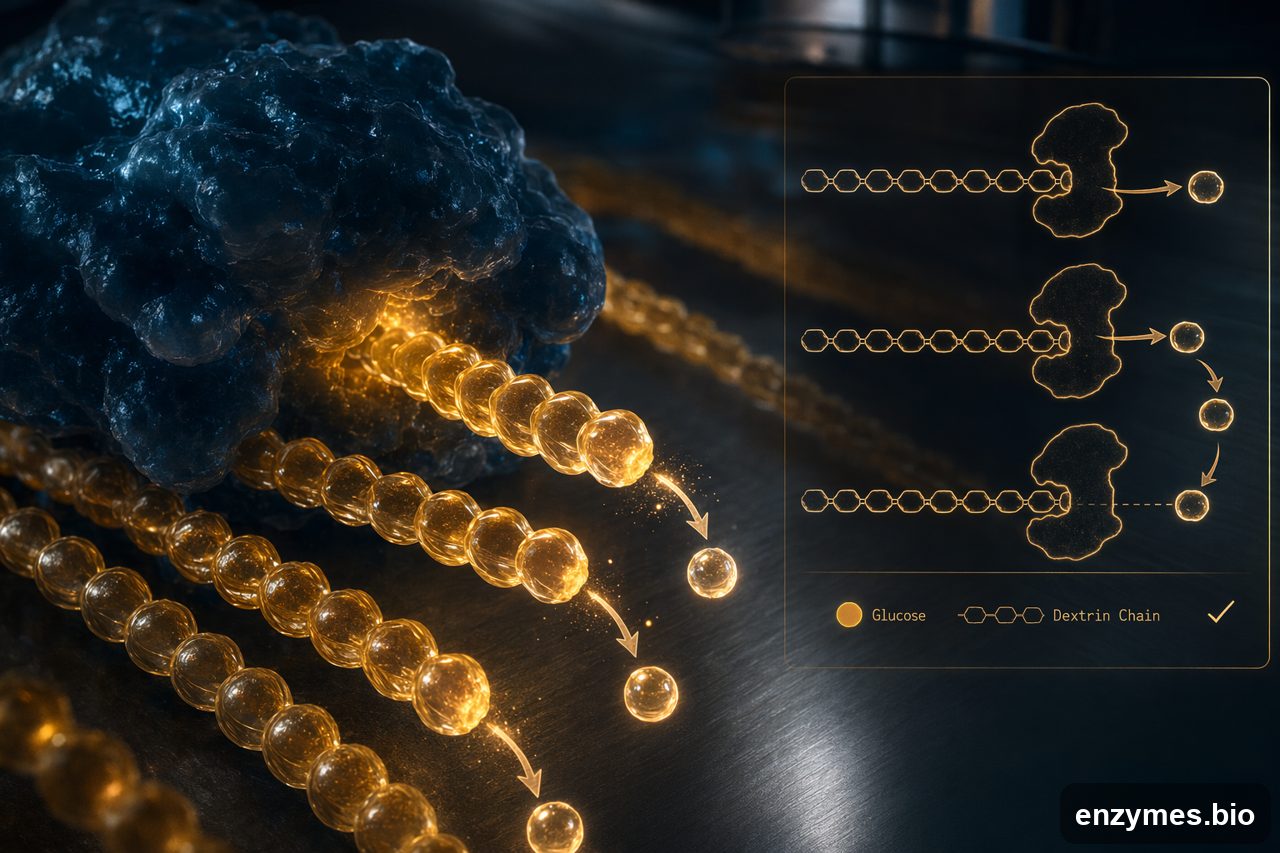
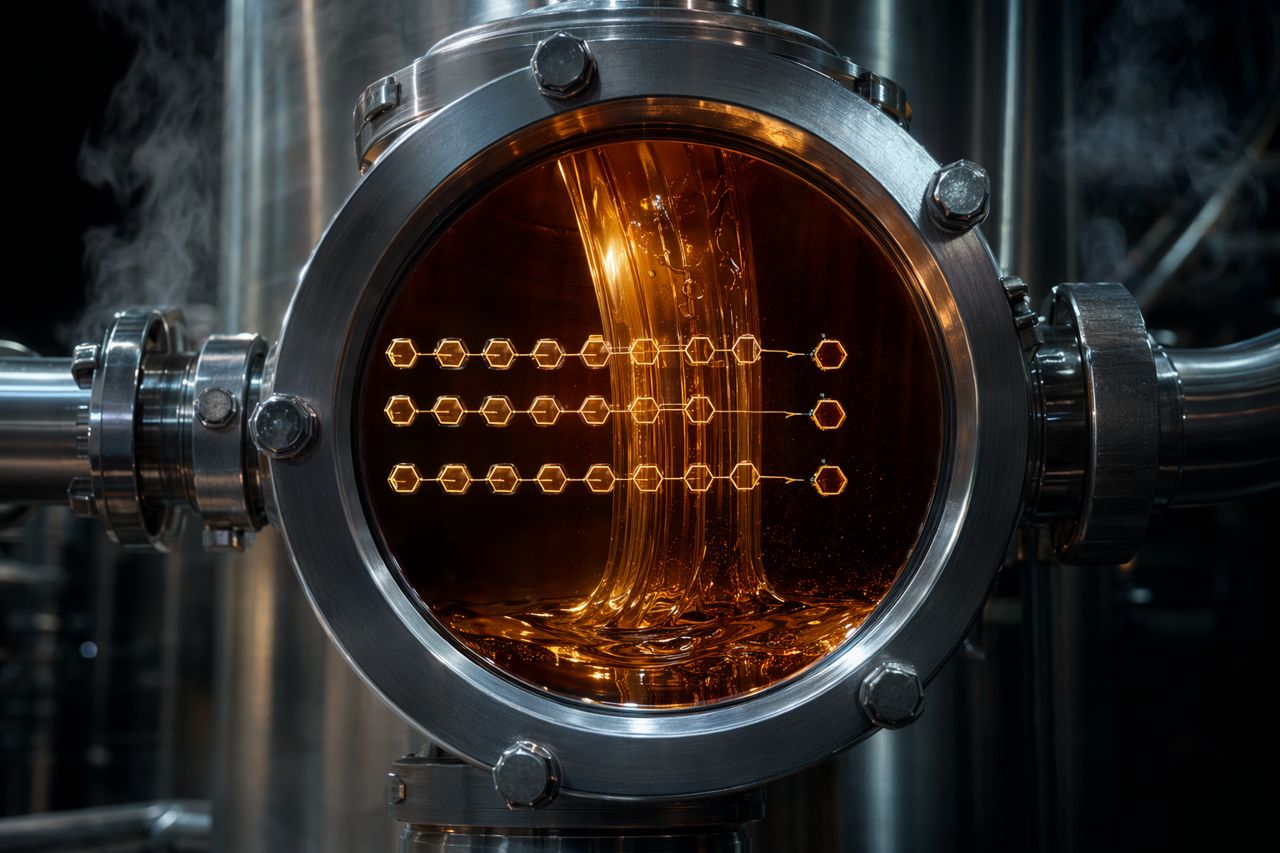
Glucoamylase is an exo-acting enzyme. Instead of cutting randomly inside the chain, it works from non-reducing ends and releases glucose units step by step.
It acts strongly on alpha-1,4 linkages and can also contribute to alpha-1,6 branch point conversion more slowly. This makes it valuable for converting liquefied starch dextrins into glucose-rich streams.
Why glucose release matters
For many industrial buyers, glucose is not just a product characteristic. It is the operating objective.
Glucoamylase supports:
higher fermentable sugar availability
more complete starch utilization
improved alcohol or organic acid fermentation feed quality
high-glucose syrup production
better consistency in saccharification profiles
reduced residual dextrin where the process specification requires deeper conversion
In fermentation, incomplete saccharification can show up as slower fermentation, lower yield, or inconsistent residual carbohydrate. In syrup production, it can affect sweetness profile, downstream refining, and final product specification.
Liquefaction vs saccharification
The cleanest way to compare the two enzymes is by process stage.
Liquefaction: alpha amylase leads
Liquefaction converts gelatinized starch into soluble dextrins. The goal is not full glucose release. The goal is controlled breakdown of starch structure so the process can continue efficiently.
Key liquefaction objectives include:
reduce viscosity quickly
stabilize flow behavior
improve heat and mass transfer
create an accessible dextrin substrate
prepare for deeper conversion
Alpha amylase is usually selected for this role because its internal cleavage pattern creates a fast viscosity drop.
Saccharification: glucoamylase leads
Saccharification converts dextrins into glucose. The goal is no longer just flow control. The goal is sugar profile.
Key saccharification objectives include:
increase glucose concentration
improve fermentable sugar release
reduce longer-chain dextrins
support final syrup or fermentation specification
improve batch-to-batch conversion consistency
Glucoamylase is selected for this role because it releases glucose from dextrin chain ends.
Do you need one enzyme or both?
In many industrial starch systems, both enzymes are required.
Use alpha amylase when the primary issue is viscosity and starch chain opening. Use glucoamylase when the primary target is glucose release.
Alpha amylase alone may be enough when
the process only needs partial starch hydrolysis
the product specification allows dextrin-rich output
viscosity reduction is the main performance requirement
downstream conversion is handled by another process step
Glucoamylase is required when
high glucose output is the target
fermentable sugar release drives process economics
residual dextrin needs to be reduced
a liquefied starch stream must be converted more completely
fermentation performance depends on consistent sugar availability
Both are typically used when
processing corn, wheat, tapioca, rice, potato, or other starches into glucose-rich streams
preparing feed for ethanol, brewing, organic acid, or amino acid fermentation
producing glucose syrup or high-dextrose intermediates
converting high-solids starch systems where viscosity control and final conversion both matter
Commercial selection criteria
Choosing between alpha amylase and glucoamylase is only the first layer. The more important procurement decision is matching the enzyme system to your actual operating window.
1. Substrate source
Different starch sources behave differently. Corn, wheat, cassava, rice, and potato starch vary in granule structure, amylose-to-amylopectin balance, protein load, lipid interaction, and gelatinization behavior.
A glucoamylase program that performs well on one liquefied substrate may need adjustment on another. Buyers should evaluate the enzyme against the real plant substrate, not only a generic starch description.
2. Process temperature profile
Alpha amylase is often expected to tolerate higher-temperature liquefaction conditions. Glucoamylase usually operates in the saccharification stage, where the temperature profile is chosen to balance enzyme performance, sugar profile, and process timing.
The handoff between stages matters. Overprocessing in liquefaction or poor cooling control before saccharification can affect the conversion path.
3. pH window
Both enzymes have preferred pH ranges, and mismatch can reduce conversion efficiency or force unnecessary process adjustment.
A good enzyme selection should fit the existing plant profile where possible. Every chemical correction has a cost: additive cost, time, corrosion consideration, wastewater load, or downstream impact.
4. Residence time
Alpha amylase is commonly evaluated by how quickly it reduces viscosity and creates a liquefied stream. Glucoamylase is evaluated by how consistently it pushes dextrins toward glucose within the available saccharification time.
A shorter residence time may require a different enzyme strategy than a long, controlled saccharification hold.
5. Downstream specification
The right enzyme package depends on what happens next.
For fermentation, the central question is whether the sugar profile supports reliable organism performance and final yield.
For syrup production, the question is whether the glucose profile, residual dextrin level, color management, filtration behavior, and downstream refining plan align.
For formulated industrial products, the question is whether the carbohydrate profile supports viscosity, stability, solids handling, and label or specification requirements.
Common misconception: glucoamylase is just a stronger alpha amylase
It is not.
Glucoamylase and alpha amylase differ in where and how they act on starch-derived chains.
Alpha amylase attacks internal bonds and rapidly changes molecular size distribution. Glucoamylase works from chain ends and releases glucose.
That difference is why substituting one for the other can create process problems. Replacing alpha amylase with glucoamylase in a high-viscosity slurry can lead to poor handling and slow conversion. Replacing glucoamylase with alpha amylase in saccharification can leave too much dextrin and too little glucose.
The enzymes are complementary, not equivalent.
Where pullulanase can enter the discussion
Amylopectin contains branch points that can limit complete conversion. Glucoamylase can contribute to branch-point conversion, but branch structures may still slow saccharification depending on substrate and process conditions.
In some high-conversion starch processes, a debranching enzyme such as pullulanase may be considered alongside glucoamylase. The purpose is to improve access to branched dextrin structures and support a more complete glucose profile.
That does not replace glucoamylase. It can support it where branch-limited conversion is a bottleneck.
Practical decision guide
If your issue is high viscosity
Start by evaluating alpha amylase performance in liquefaction. Review starch solids, gelatinization quality, heating profile, mixing, hold time, and whether the liquefied stream is consistent enough for saccharification.
If your issue is low glucose or residual dextrin
Focus on glucoamylase selection and saccharification conditions. Review liquefaction quality, pH, temperature, residence time, substrate source, and whether branch structures are limiting conversion.
If your fermentation yield is inconsistent
Look at the full enzyme sequence. A weak liquefaction step can create inconsistent dextrin feed. A weak saccharification step can reduce fermentable sugar availability. Both can appear as fermentation variability.
If your syrup specification is drifting
Evaluate the glucose-forming stage first, but do not ignore liquefaction. The dextrin profile entering saccharification affects how efficiently glucoamylase can finish the conversion.
Procurement checklist for glucoamylase evaluation
Before requesting pricing or samples, align internally on the process facts that determine fit.
Useful information includes:
starch source and approximate solids profile
current liquefaction enzyme and operating window
saccharification temperature and pH targets
desired glucose or fermentable sugar outcome
batch, continuous, or hybrid process design
residence time available for saccharification
downstream use: syrup, ethanol, brewing, organic acids, amino acids, or another fermentation route
pain point: yield, viscosity, residual dextrin, cycle time, consistency, or cost-in-use
format preference for handling, storage, and dosing infrastructure
The more specific the process description, the faster a supplier can recommend a glucoamylase route that fits the plant rather than a generic enzyme label.
Bottom line
Alpha amylase and glucoamylase solve different problems in starch processing.
Alpha amylase makes starch manageable. Glucoamylase makes glucose available.
If the plant objective is viscosity reduction, alpha amylase is the primary lever. If the objective is fermentable sugar release or high-glucose output, glucoamylase is the decisive enzyme. In many high-yield starch processes, the strongest result comes from engineering the handoff between both.
Request a quote or get pricing
Tell us what starch stream you are converting and what output you need. Sacchera can help compare glucoamylase options for saccharification performance, process fit, and commercial supply.