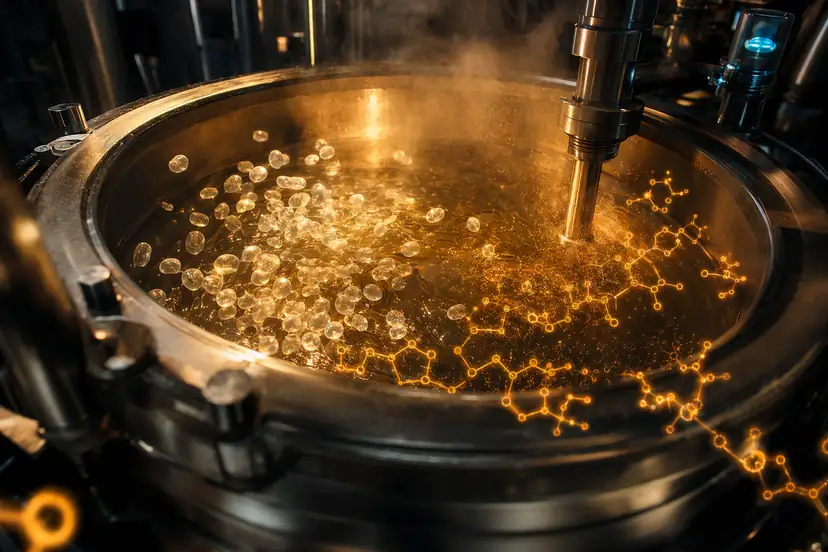
A technical guide for brewing, distilling, and fermentation teams on how glucoamylase converts starch dextrins into fermentable glucose for higher yield, cleaner attenuation, and more consistent process control.
High DE potentialLow residual dextrinFermentation-ready
Fermentation performance is only as strong as the carbohydrate profile feeding it. In grain, starch is abundant but not directly fermentable. It must first be broken down into sugars that yeast or production microbes can transport, metabolize, and convert into ethanol, organic acids, biomass, or other target products.
Glucoamylase, also known as amyloglucosidase or glucan 1,4-alpha-glucosidase, is used to push starch conversion further by releasing glucose from liquefied starch and dextrin chains. For breweries, distilleries, and industrial fermentation plants, that can mean more fermentable extract from the same raw material, improved attenuation, lower residual dextrin load, and tighter batch-to-batch consistency.
Sacchera positions glucoamylase as a process lever: not a generic additive, but a tool for converting carbohydrate potential into measurable production output.
What are fermentable sugars?
Fermentable sugars are carbohydrates that a fermentation organism can consume under the conditions of a process. In starch-based production, the main relevant sugars and fragments include:
Glucose — directly fermentable by most production yeasts and many industrial microbes.
Maltose — fermentable by many brewing and distilling yeasts, depending on strain and process conditions.
Maltotriose — fermentability varies by yeast strain, temperature profile, nutrient status, and stress load.
Limit dextrins and larger dextrins — generally less fermentable or non-fermentable unless further hydrolyzed.
A mash or liquefied starch stream may test as carbohydrate-rich while still containing a meaningful share of material that the organism cannot efficiently use. Glucoamylase helps close that gap by converting residual dextrins toward glucose.
Where glucoamylase fits in starch conversion
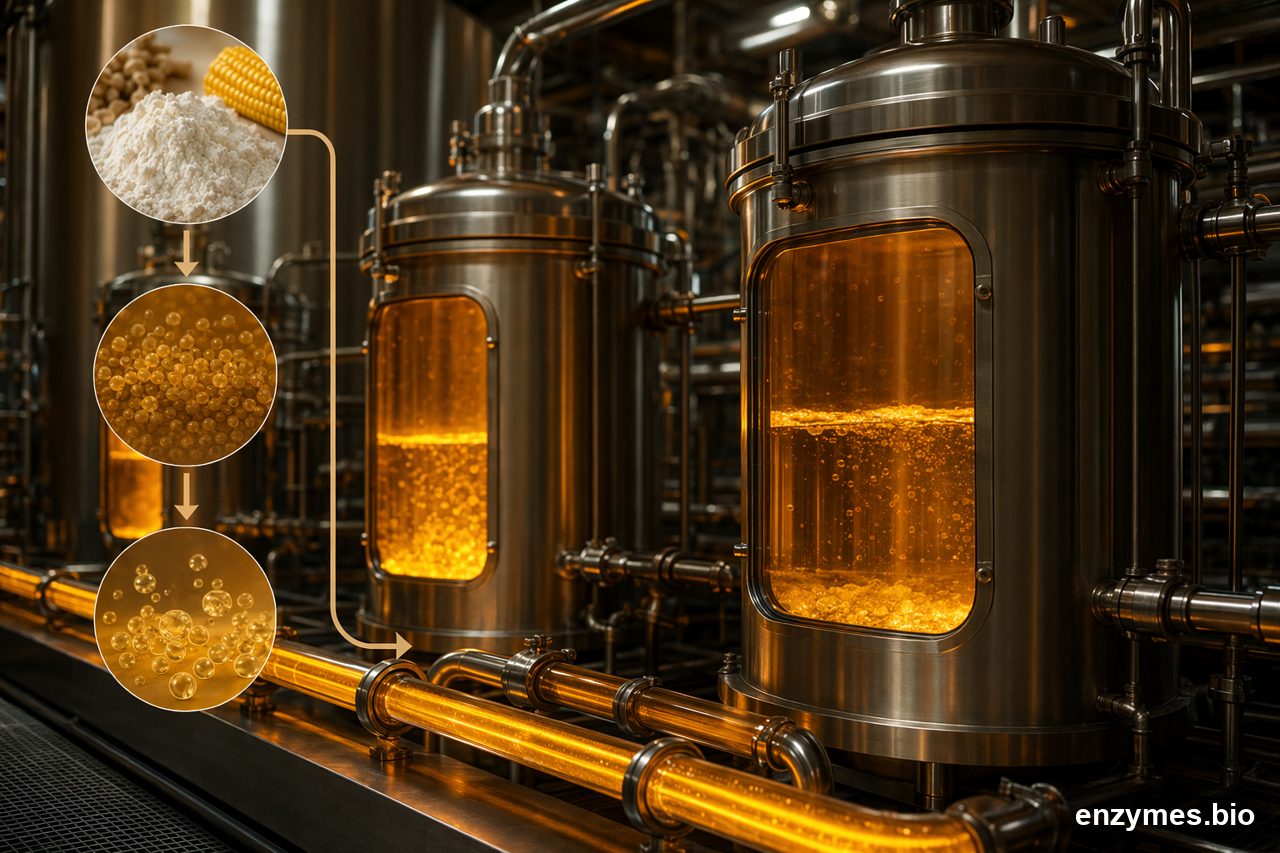
Starch conversion is typically handled in stages.
1. Gelatinization and liquefaction
Heat and water open the starch structure. Alpha-amylase is commonly used to reduce viscosity and cut long starch chains into shorter dextrins. This stage improves pumpability and prepares the substrate for deeper saccharification.
2. Saccharification
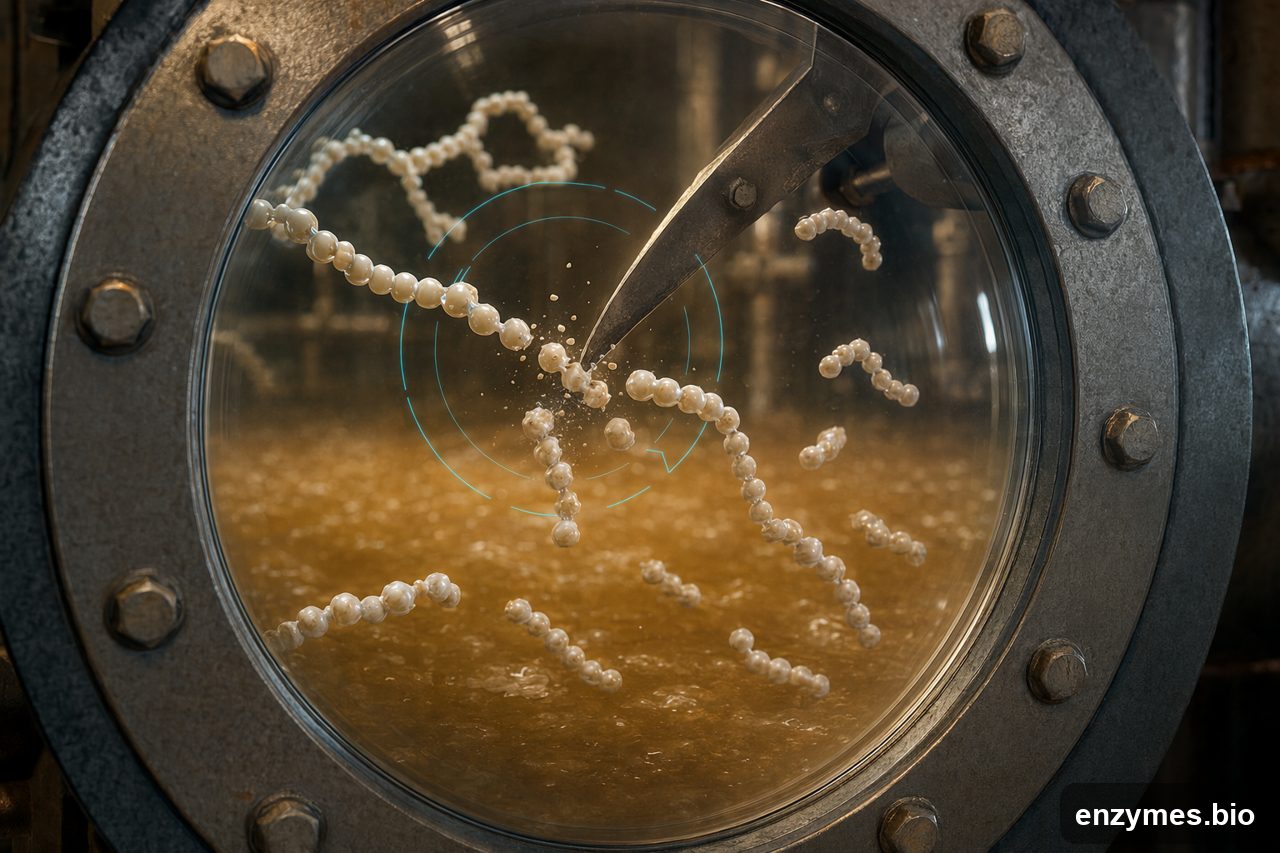
Glucoamylase acts on dextrins from the non-reducing ends of carbohydrate chains, releasing glucose stepwise. It also supports further conversion of branched structures, helping reduce residual dextrin content.
3. Fermentation
The resulting sugar profile determines how efficiently the organism can convert available carbohydrate into the desired output. A glucose-rich feed can support strong fermentability, though the optimal profile depends on yeast strain, product target, and plant operating philosophy.
For production teams, fermentable sugars are not just a lab number. They influence plant economics.
Higher extract utilization
Better saccharification helps recover more usable carbohydrate from grain, flour, or other starch inputs. This is especially important where raw material cost is a primary driver of margin.
Stronger attenuation and lower residual dextrin
In brewing and distilling, incomplete conversion can leave residual carbohydrates that limit attenuation, influence mouthfeel, reduce alcohol yield, or create process variability. Glucoamylase can be used to drive a drier, more complete fermentation profile where the product specification calls for it.
Viscosity reduction and easier handling
As starch and dextrins are hydrolyzed, process streams can become easier to mix, transfer, heat, cool, and separate. This supports equipment throughput and can reduce stress on pumps, heat exchangers, and downstream separation steps.
More predictable fermentation kinetics
A consistent sugar profile gives fermentation teams a more stable starting point. That can improve scheduling discipline, reduce troubleshooting, and support repeatable quality across campaigns.
Applications in brewing, distilling, and fermentation
Brewing
Glucoamylase is used when the target is a highly fermentable wort, low residual carbohydrate, or a drier beer profile. It is relevant for high-attenuation styles, low-carbohydrate beer programs, and process designs where fermentability needs to be extended beyond what malt enzymes alone deliver.
Key considerations include:
Desired final gravity and sensory profile
Yeast strain sugar uptake behavior
Mash and fermentation timing
Risk of over-attenuation if not controlled
Labeling and regional regulatory requirements
Distilling
In grain distilling, fermentable sugar release is directly tied to alcohol yield. Glucoamylase supports conversion of liquefied starch into glucose that yeast can consume efficiently, helping distillers improve extract utilization and reduce leftover carbohydrate in stillage.
Key considerations include:
Raw material variability
Liquefaction quality
Mash solids and viscosity
Fermentation residence time
Thermal and pH compatibility with the process window
Industrial fermentation
For producers of ethanol, organic acids, enzymes, amino acids, and microbial products, glucoamylase can be part of the feedstock preparation strategy. It helps convert starch-based substrates into a more accessible carbon source, allowing fermentation teams to control feed quality and reduce carbohydrate uncertainty.
Key considerations include:
Microorganism preference for glucose versus mixed sugars
Fed-batch or batch feeding strategy
Sterility and contamination control
Downstream impurity sensitivity
Documentation requirements for the final market
Process variables that affect results
Glucoamylase performance depends on the full process environment, not the enzyme alone. Teams should evaluate:
Substrate preparation: Poor gelatinization or incomplete liquefaction can limit access to dextrins.
pH window: Enzyme performance and stability depend on the acidity of the process stream.
Temperature profile: Saccharification temperature affects conversion rate, enzyme life, and microbial risk.
Hold time: More complete conversion requires sufficient contact time under suitable conditions.
Solids loading: Higher solids increase productivity but can create mixing and viscosity constraints.
Upstream enzyme pairing: Alpha-amylase and glucoamylase are commonly coordinated rather than treated as isolated inputs.
Microbial strain: Sugar uptake capacity determines whether the released sugar becomes productive output.
The strongest results come from matching enzyme selection to the plant’s actual operating window, not forcing the plant around a generic ingredient.
Selection criteria for B2B buyers
When sourcing glucoamylase for fermentable sugar production, procurement and technical teams should align on more than price per package. Useful evaluation points include:
Food, beverage, feed, or industrial suitability for the intended market
Liquid or dry format preference
Compatibility with existing dosing and storage systems
Process pH and temperature fit
Performance on the actual starch substrate used on site
Documentation package and traceability
Packaging size, lead time, and supply continuity
Technical support for trials, scale-up, and troubleshooting
A well-specified glucoamylase should reduce uncertainty for both the plant floor and the purchasing desk.
Practical implementation checklist
Before trialing glucoamylase, define the process question clearly:
Are you trying to increase alcohol yield, reduce residual carbohydrates, lower viscosity, shorten conversion time, or stabilize variability?
What is the current carbohydrate profile after liquefaction or mash conversion?
Which organism will ferment the resulting sugars, and what sugar profile does it prefer?
Where will the enzyme be introduced: saccharification tank, mash stage, fermenter, or feed preparation step?
What operating limits are fixed by equipment, product quality, or regulation?
How will success be measured commercially: yield, throughput, final gravity, residual carbohydrate, cycle time, or consistency?
Clear trial design prevents enzyme evaluation from becoming a moving target.
Common pitfalls
Treating liquefaction and saccharification as the same step
Liquefaction reduces starch chain length and viscosity. Saccharification converts dextrins into fermentable sugars. Both matter, but they solve different process problems.
Overlooking yeast or organism limitations
Releasing more glucose is valuable only if the fermentation organism can use it effectively under plant conditions. Nutrients, alcohol stress, temperature, and osmotic load can all affect performance.
Optimizing only for maximum conversion
Maximum glucose release is not always the right target. Brewing applications may require sensory balance. Industrial fermentations may need controlled feeding. The best endpoint is the one that supports the product specification and plant economics.
Ignoring raw material variability
Corn, wheat, barley, cassava, rice, and mixed starch streams differ in gelatinization behavior, protein load, fiber, and processing response. Enzyme programs should be validated against real incoming material, not only idealized samples.
Sacchera’s position
Sacchera glucoamylase solutions are specified for teams that need controlled starch saccharification, dependable fermentable sugar release, and commercial clarity. We support buying decisions with application-focused guidance for brewing, distilling, and industrial fermentation environments.
If your process depends on converting starch value into fermentable output, the right glucoamylase program can improve the reliability of that conversion.
Request pricing or technical fit guidance
Use the form below to request a quote, get pricing, or ask for a fit check against your substrate, process window, and application target.