Choosing Glucoamylase for Industrial Applications | Sacchera
A practical B2B guide to selecting glucoamylase for starch saccharification, glucose syrup production, fermentation feedstocks, and high-yield industrial conversion.
High DE potentialLow residual dextrinFermentation-ready
Glucoamylase is not a commodity decision when yield, viscosity, filtration, fermentation response, and batch consistency are on the line. The right grade should match the substrate, upstream liquefaction process, operating window, documentation needs, and commercial supply model of the plant.
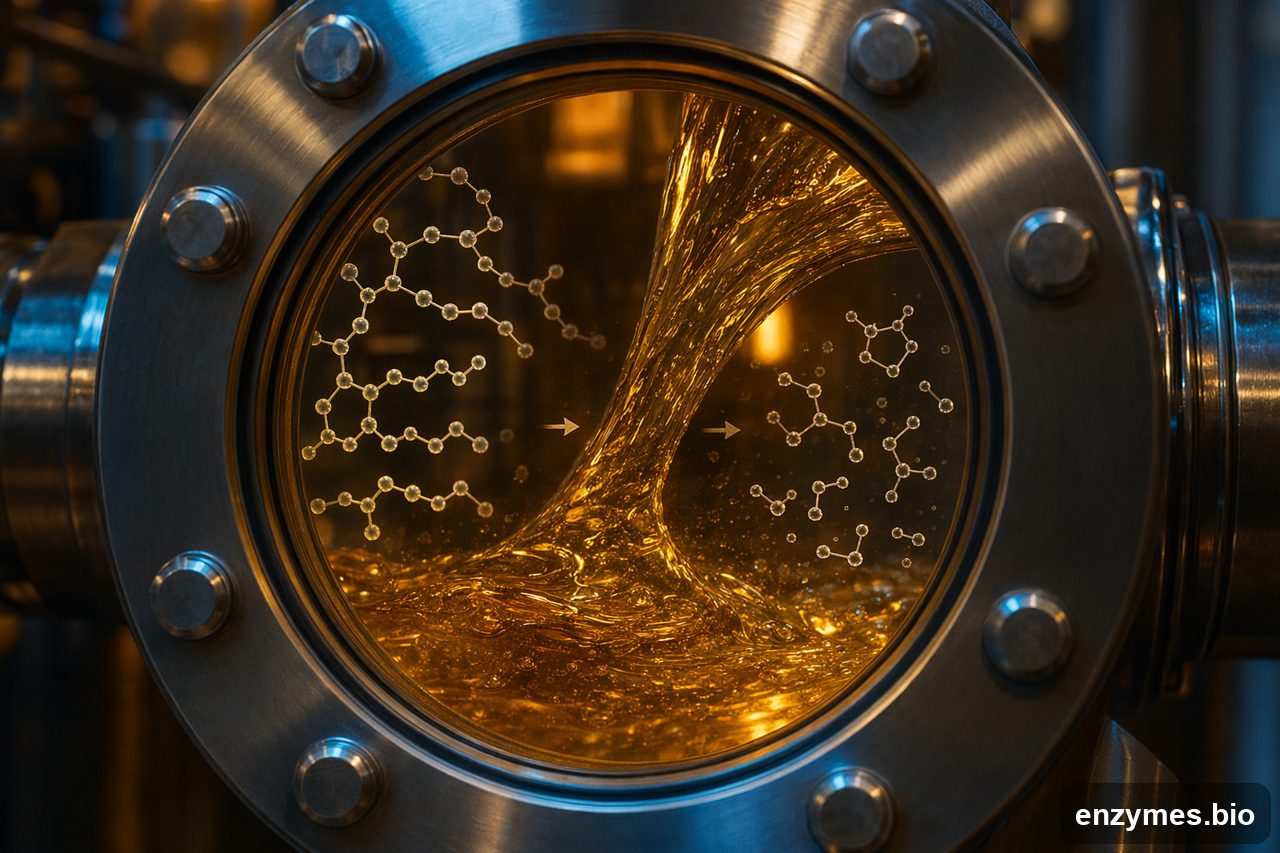
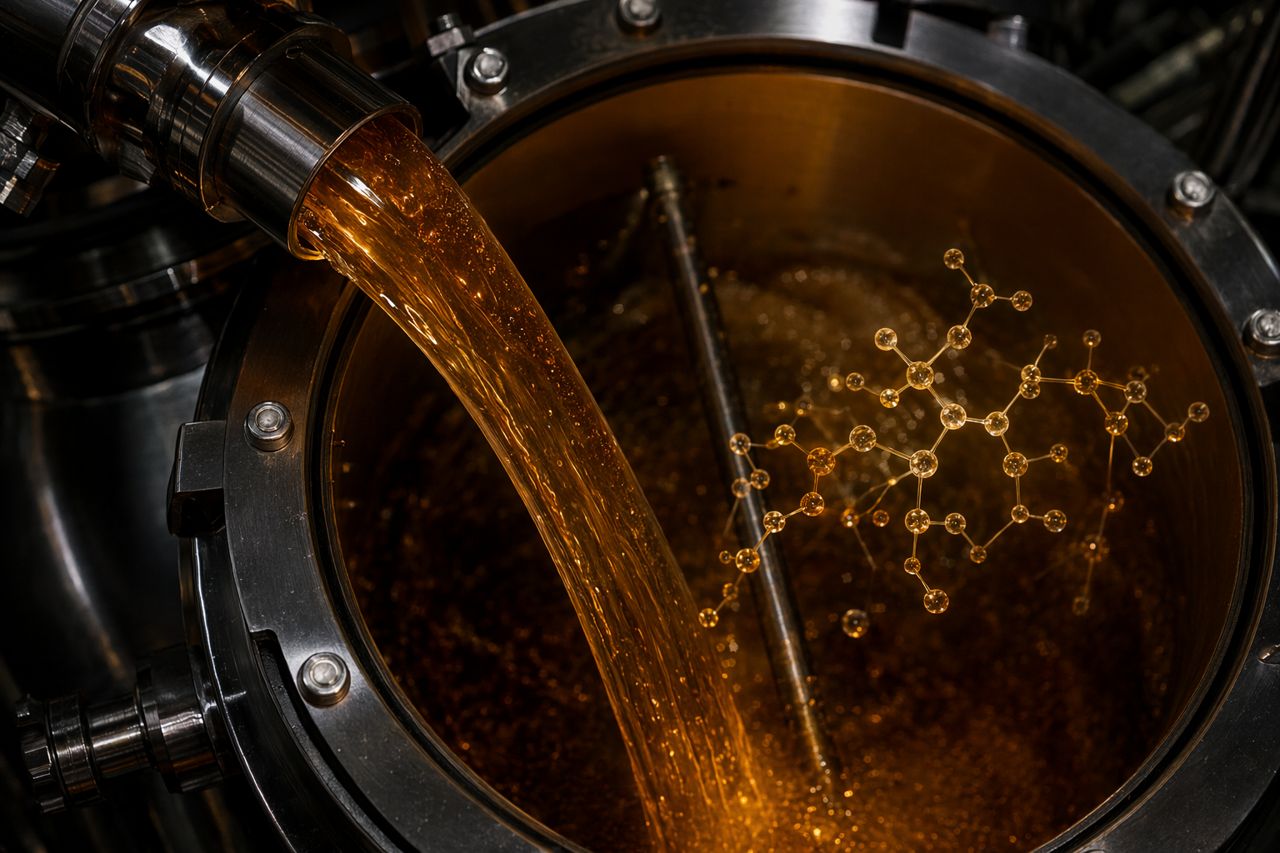
Glucoamylase, also known as amyloglucosidase or glucan 1,4-alpha-glucosidase, converts dextrins and starch-derived oligosaccharides into glucose by cleaving glucose units from non-reducing chain ends. In industrial terms, that means higher fermentable sugar release, cleaner saccharification, and better use of every ton of starch input.
Where glucoamylase creates industrial value
Glucoamylase is selected when the process objective is deep starch conversion rather than simple liquefaction.
Common industrial applications include:
Glucose syrup production — converting liquefied starch into high-glucose syrups with controlled residual dextrin.
Fermentation feedstock preparation — generating fermentable glucose for ethanol, organic acids, amino acids, enzymes, yeast, and other bioprocesses.
Brewing and distilling adjunct conversion — improving fermentability from starch-based inputs where process conditions permit enzyme use.
Food and ingredient processing — supporting sweetness development, carbohydrate profile control, and downstream processing efficiency.
Industrial starch conversion — reducing viscosity and improving conversion economics in starch-rich process streams.
Start with the substrate, not the product sheet
The best glucoamylase choice depends on what the enzyme actually sees in the plant.
Before comparing candidates, define:
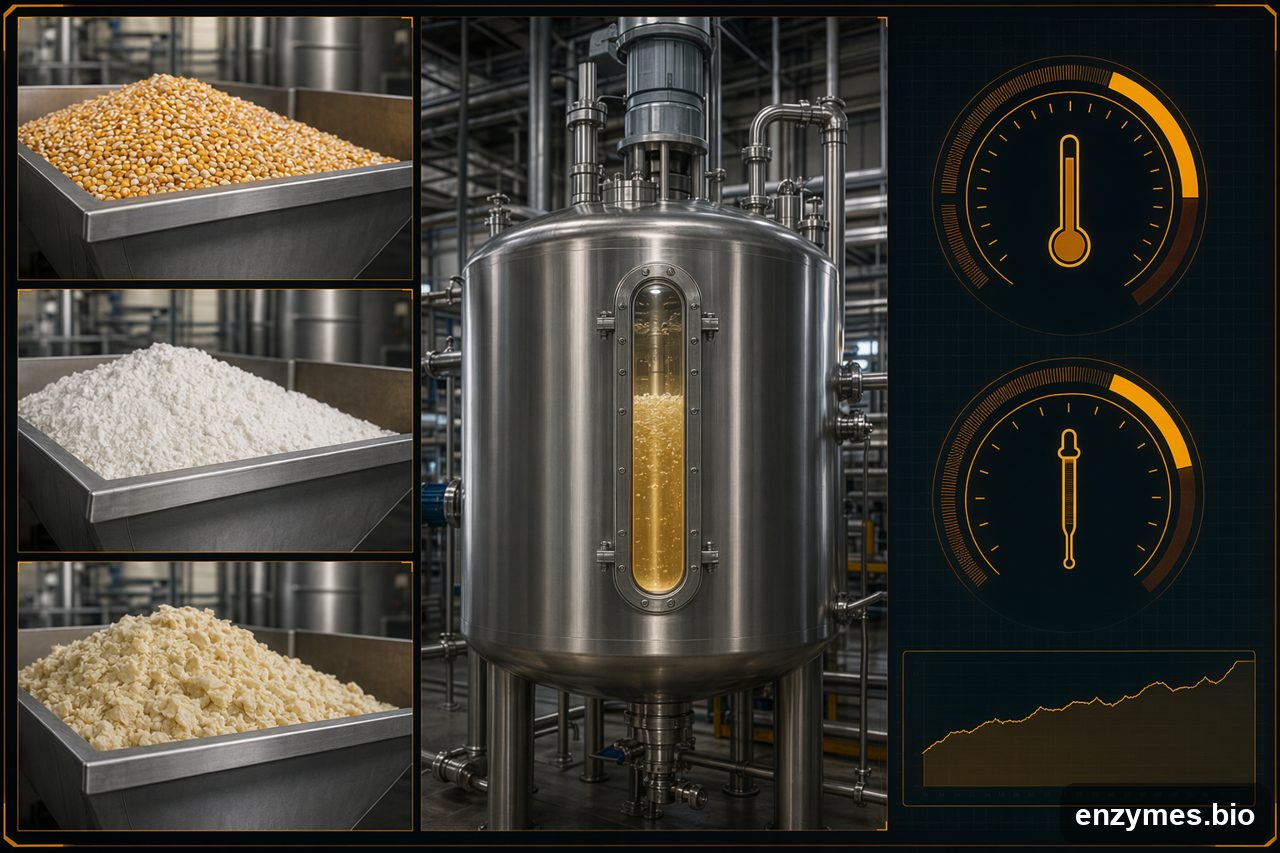
Starch source: corn, wheat, cassava, rice, potato, or blended inputs.
Liquefaction quality after alpha-amylase treatment.
Dextrin profile entering saccharification.
Dry solids range and slurry behavior.
Target glucose level or fermentation performance.
Temperature and pH profile during hold time.
Residence time available for conversion.
Downstream sensitivity to residual dextrin, color, viscosity, or filtration load.
A glucoamylase that performs well in one starch system may not be the most economical choice in another. Sacchera evaluates fit around the real process target: conversion output per ton of substrate, not just enzyme identity.
Key selection criteria
1. Conversion depth
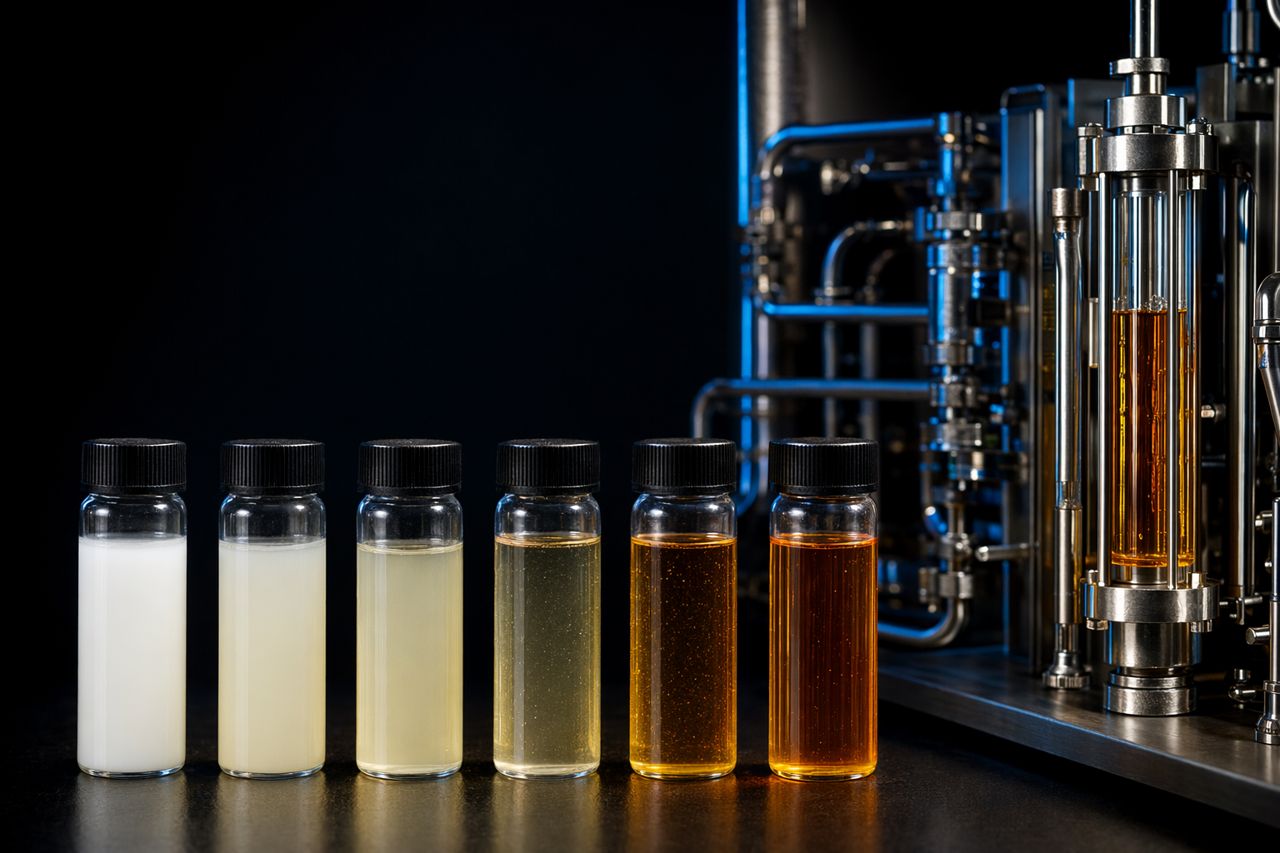
For syrup plants and fermentation operations, the central question is how completely the enzyme converts liquefied starch into glucose under actual process conditions. Look for stable glucose release across the intended operating window and consistent performance when substrate quality shifts.
2. Process compatibility
Glucoamylase should work inside the plant’s available pH, temperature, hold-time, and cleaning constraints. A technically strong enzyme that requires a disruptive process change may not be the best commercial fit.
3. Viscosity and handling impact
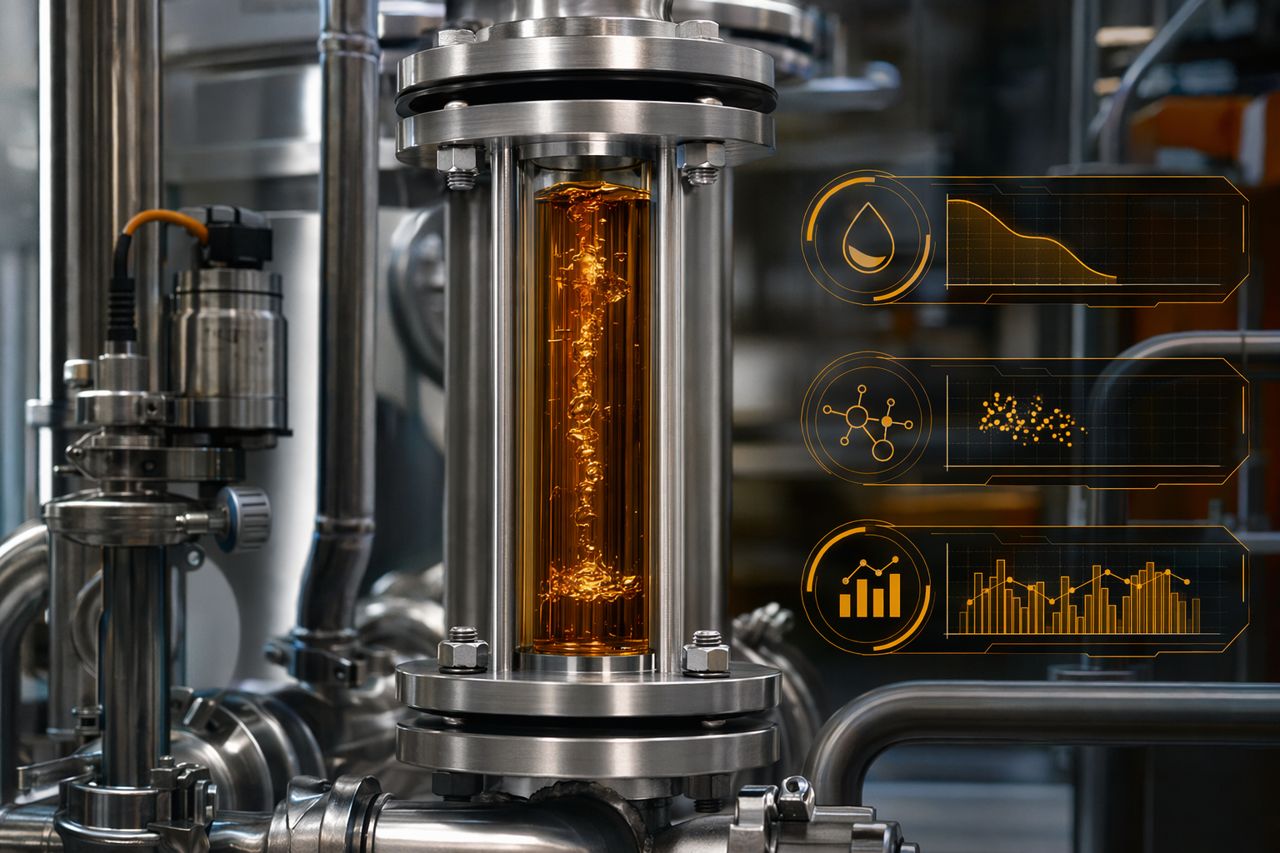
Effective saccharification can reduce viscosity and improve pumping, mixing, heat transfer, filtration, and finishing. Evaluate the enzyme not only by sugar profile but also by how the material behaves through the line.
4. Fermentation response
For fermentation feedstocks, glucose release is only part of the decision. Compare final fermentation performance, residual carbohydrate, attenuation behavior, throughput, and consistency between batches.
5. Formulation format
Liquid and dry formulations may suit different dosing systems, storage conditions, logistics models, and plant handling preferences. Procurement and operations should confirm format early, not after trial success.
6. Documentation and compliance fit
Depending on the end market, buyers may require food-processing documentation, allergen statements, non-GMO position, country-of-origin information, halal or kosher status, processing aid guidance, or other quality records. Confirm documentation availability before scale-up.
7. Supply reliability
Industrial enzyme purchasing is not only about the first sample. Confirm lead time, packaging options, lot consistency, technical support, and the supplier’s ability to support repeat commercial demand.
What to request from a supplier
When comparing glucoamylase options, ask for practical data that helps a plant make a decision:
Recommended operating window.
Suitable substrate and application guidance.
Suggested starting dosage range for plant trials.
Formulation type and handling requirements.
Storage conditions and shelf-life guidance.
Packaging and minimum order options.
Available quality and regulatory documentation.
Commercial lead time and supply continuity position.
Trial support and scale-up recommendations.
Avoid choosing on headline claims alone. A credible supplier should help translate the enzyme into a plant-ready specification.
How to run a useful comparison trial
A good glucoamylase trial should mirror the process you intend to operate commercially.
Recommended trial structure:
Use the same liquefied starch stream for all candidates.
Keep dry solids, pH, temperature, mixing, and hold time consistent.
Compare against the current enzyme or process baseline.
For fermentation, track sugar consumption, process time, final output, and residual carbohydrate.
Review cost per ton of substrate converted, not simply cost per kilogram of enzyme.
Confirm that the selected grade can be supplied with the needed documentation and packaging.
The winning enzyme is the one that improves the total process equation: yield, consistency, operability, and delivered cost.
Common red flags when selecting glucoamylase
Be cautious if a candidate shows any of the following:
Good small-sample conversion but poor plant reproducibility.
High required dosage to reach the target profile.
Narrow operating tolerance that conflicts with normal process variation.
Unclear formulation, storage, or handling guidance.
Missing documentation for the intended end market.
Long or uncertain commercial lead times.
No technical support for scale-up interpretation.
Sacchera selection position
Sacchera is built for industrial buyers who need glucoamylase decisions to be technical, commercial, and executable. We help teams compare application fit, define trial conditions, interpret performance data, and move from sample evaluation to reliable supply.
If you are selecting glucoamylase for syrup production, fermentation, brewing, distilling, or starch conversion, bring the process conditions. We will help identify the most practical grade and quote path.
Request a quote or get pricing
Use the form below to send your process brief. Include starch source, application, operating pH and temperature, target output, current enzyme status, preferred formulation, documentation requirements, and expected order volume.